
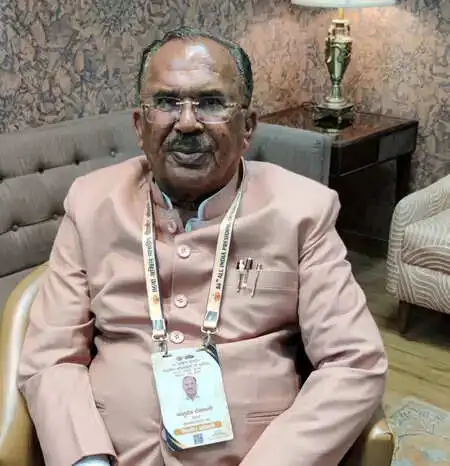
Lucknow, January 21 (IANS). Under the platform of All India Presiding Officers Conference (AIPOC), an intense discussion is going on regarding the functioning, discipline and accountability of the Legislative Assemblies across the country. During the same conference, Rajasthan Assembly Speaker Vasudev Devnani, in a special conversation with IANS, said that to strengthen democratic institutions, longer functioning of the Houses, active participation of members and extensive use of technology are very important.
He clearly said that ‘the longer the House runs, the more effectively it will be possible to resolve public issues.’
Question: Are some discussions also being held on strengthening democracy?
Answer: Yes, there was broad consensus on two-three important suggestions in the conference. First, minimum working days should be fixed for the assemblies across the country. Fixing a minimum limit will provide adequate time for public issues, questions and answers and legislative work. Second, attendance and participation of members should be increased. Every public representative who wins the elections should get time to present his views in the House. This can be improved by developing a culture of dialogue, training and logical debate. The tendency to come to the House after studying bills and subjects will also have to be increased.
Question: The opposition continuously raises questions about the short duration of the House. Is this problem in all states?
Answer: This problem exists in almost all the states and it is increasing gradually. It is considered an ideal situation that the House should run essentially for 60 days. The current situation is that how long the House will be able to function depends on the legislative work of the government, the cooperation of the opposition and peaceful debate. If the debate turns into an uproar, adjournment causes loss to both the parties. We have started all-party meetings in Rajasthan. Positive signs are being received.
Question: How will you be able to stop the uproar and repeated adjournments?
Answer: No separate proposal has come on this subject in the conference. On the basis of experience, it can definitely be said that resolution of the deadlock is very important. In case of adjournment of the House, an attempt can be made to find a solution by making the leaders of the ruling party and the opposition sit in the Speaker’s chamber. Yes, it is true that if the deadlock is on a public issue then the solution is relatively easy, but when the matter is political-strategy, then the difficulties increase. Still, dialogue is the only way.
Question: Maintaining impartiality and discipline must be very challenging for a presiding officer?
Answer: Absolutely, a big challenge. Presently it is increasing further. Let me tell you that the roles of power and opposition keep changing and so do their viewpoints. Therefore, it is necessary to increase opportunities for collective discussion. We will have to set limits for ourselves with more dialogue and become allies in strengthening democracy.
Question: What is the preparation of Rajasthan Assembly regarding e-legislation, digital proceedings and AI?
Answer: Rajasthan Assembly is now completely paperless. There are iPads on every member’s table. More than 80 percent MLAs are using it regularly. Digital signatures have been introduced in committee meetings. We are also moving towards completely digitalizing systems like gate passes and identity cards. Along with this, a digital museum has been built in the Assembly premises, in which the political, social and cultural history from 1952 till now has been displayed through modern technology. Another innovation has been made in Rajasthan. A digital record of the MLA’s statement is being made available in a pen drive on the same day.
Question: In the current political environment, are the assemblies able to discharge their constitutional responsibilities properly?
Answer: Yes, responsibilities are being discharged. The budget is presented, question hour takes place, the legislative process goes on. Now all that remains is to make efforts to make it better, more serious and in line with the aspirations of the public through longer debates. We are making efforts in this direction also.
Question: Do you have any message for the public regarding democracy and dignity of legislatures?
Answer: Our MLAs are elected from among the public. Therefore, it is his responsibility to remain connected with the common people. The public should also do the same. He also remained alert for the entire five years. If this happens then the accountability of the concerned MLAs will automatically increase.
–IANS
wickety/as