
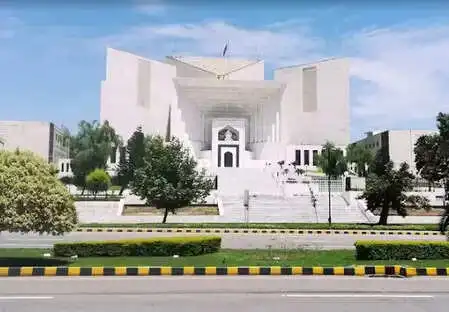
Islamabad/New Delhi, November 13 (IANS). As soon as Pakistan’s most controversial amendment bill was passed on Thursday evening, two Supreme Court judges submitted their resignations in protest.
Senior judges Justice Mansoor Ali Shah and Justice Athar Minallah have resigned from the Supreme Court.
The development comes after both houses of Parliament passed the controversial 27th Constitutional Amendment, which was later signed by President Asif Ali Zardari.
Justice Mansoor Ali Shah wrote his resignation letter in both English and Urdu. According to ‘The Express Tribune’, in his 13-page resignation letter, Shah said that the 27th Constitutional Amendment is a serious attack on the Constitution of Pakistan. He said that the judiciary has become divided, due to which the country has gone back decades.
Justice Mansoor Ali Shah said that the 27th Constitutional Amendment has fragmented the Supreme Court of Pakistan. He said that the 27th Amendment has brought the judiciary under the control of the government. This amendment is a serious blow to the spirit of constitutional democracy of Pakistan.
In his resignation letter, Justice Athar Minallah said that when he took the oath of office 11 years ago, he took an oath to protect “the Constitution” and not “any Constitution”.
Justice Minallah wrote that before the passage of the 27th Constitutional Amendment, he had written to the Chief Justice of Pakistan raising concerns about the impact of the proposed changes on the country’s constitutional order.
He added, “I need not repeat the detailed contents of that letter, but suffice it to say that against the backdrop of selective silence and inaction, those fears have now come true.”
The judge lamented that the Constitution he had sworn to protect was “no more”, and warned that the new foundation laid under the amendment rested on its “grave”.
Justice Minallah wrote, “What is left is just a shadow, which neither breathes its own soul nor speaks the words of those to whom it belongs.”
He also reflected on the importance of judicial robes, saying, “These robes we wear are more than mere ornaments. They are reminders of the noble trust placed in those who are fortunate enough to wear them. Instead, throughout our history, they have often been symbols of betrayal, both through silence and complicity.”
On November 10, Supreme Court Justice Mansoor Ali Shah warned in a letter to Chief Justice of Pakistan Justice Yahya Afridi that if the judiciary did not remain united, its independence and judgments would be in danger. He emphasized that history does not remember those who remain silent, but honors those who stand up for the supremacy of the Constitution.
Justice Shah questioned the appropriateness of a new constitutional amendment as issues related to the 26th Constitutional Amendment remain unresolved. The letter further states that the establishment of the Federal Constitutional Court is being justified on the basis of pending cases, although most of these cases are at the district judiciary level, not the Supreme Court level.
–IANS
kr/