
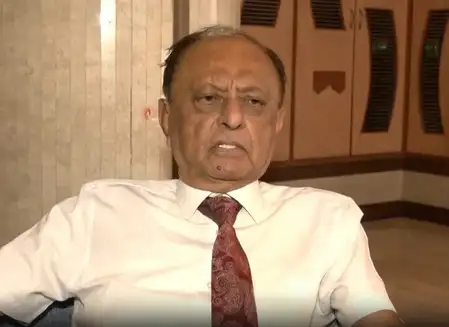
Mumbai, January 27 (IANS). The debate in the political circles has intensified after the Badrinath-Kedarnath Temple Committee (BKTC) announced a ban on the entry of non-Hindus into the Char Dham temples. On this issue, senior Trinamool Congress (TMC) leader Majeed Memon has raised objections to the decision of the state government and the temple committee.
Majeed Memon, in a special conversation with news agency IANS on Tuesday, said that if the state government or any institution associated with it takes any decision which conflicts with the constitutional rights of the citizens, then it cannot last for long. He clearly said that the Constitution of India gives equal rights to all citizens and such restrictions may prove to be weak on the constitutional test.
The TMC leader said that usually when such restrictions are imposed, they should be accompanied by certain conditions and legal basis. Preventing a group from visiting a public place of worship on the basis of religious identity alone can be legally challenging. He also said that if the decision to legally ban non-Hindus on Char Dham Yatra or temple entry is challenged in the court, then as per his assessment the court may overturn the decision.
Let us tell you that according to the recent decision of Badrinath-Kedarnath Temple Committee (BKTS), only Hindus will be allowed to enter the centuries-old temples. This proposed restriction will be applicable to all the temples run by the committee, including Badrinath and Kedarnath Dham. BKTS President Hemant Dwivedi said in this regard that non-Hindus will be banned from entering all the temples under the jurisdiction of the committee.
Apart from Kedarnath and Badrinath temples, Char Dham also includes Gangotri and Yamunotri. The doors of both these pilgrimage sites are scheduled to reopen on April 19 with the festival of Akshaya Tritiya. The announcement comes amid a major debate over banning entry of non-Hindus at major religious places in Uttarakhand. Earlier this month, posters declaring Haridwar’s Har Ki Pauri as ‘forbidden to non-Hindus’ appeared at the world-famous pilgrimage site, sparking a controversy. In these posters, the Har Ki Pauri area was completely described as a ‘Hindu area’, thereby further intensifying the debate regarding religious access in public places.
–IANS
PSK