
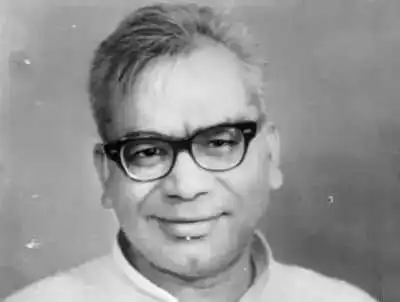
New Delhi, October 11 (IANS). Born on 23 March 1910 in Akbarpur district of Uttar Pradesh, situated on the banks of Saryu River, Ram Manohar Lohia was not just a person but an ideology. The patriotism of his father Hiralal and the untimely demise of his mother Diwan Devi made his childhood rebellious.
Growing up in the village soil, Lohia saw closely the plight of farmers and caste discrimination, which lit the spark of socialism in his heart. From studying in Berlin to the prisons of the freedom struggle, Lohia raised his voice against injustice at every step.
His pen and deeds not only challenged British rule, but also waged a war against caste, inequality and abuse of power even after independence.
Ram Manohar Lohia’s childhood was spent in the rural environment of Akbarpur, where he heard the sobbing of farmers and saw the shackles of caste. This experience sowed the seed of socialism in his heart. In his journey of education, Lohia never limited himself to books. After graduating from Calcutta University, he reached Berlin.
The shadow of Nazism had begun to loom on the streets of Germany. Lohia earned a doctorate in economics and politics there, but learned more from life than from books. It took only three months to learn the German language, surprising Professor Jombart. But the rise of Hitler shocked him. He returned to India and became the pioneer of a new revolution.
When he reached India in 1934, he directly joined the Congress Socialist Party (CSP). Together with Jayaprakash Narayan, he connected socialism with Indian soil. Lohia believed, “Socialism is not just a religion of books, but of action.” His pen gave new life to the magazine ‘Congress Socialist’, where he attacked the roots of injustice.
After the country became independent, he remained dissatisfied with the Congress rule of Jawaharlal Nehru. He gave the slogan of ‘Sapta Kranti’. Abolition of caste, priority to Hindi in language policy, formation of small states were his dreams. He was active in the Goa Liberation Movement, where he raised his voice against the Portuguese.
Ram Manohar Lohia emphasized women’s rights and said that socialism is incomplete without gender equality. He died on 12 October 1967 in New Delhi, but Lohia’s legacy lives on. Today, when caste walls are standing tall and linguistic disputes are burning, Lohia’s voice resonates.
Ram Manohar Lohia was not just a leader, but a philosophy of rebellion and equality. His life proves that one person’s pen and actions can bring revolution.
–IANS
AKS/DKP