
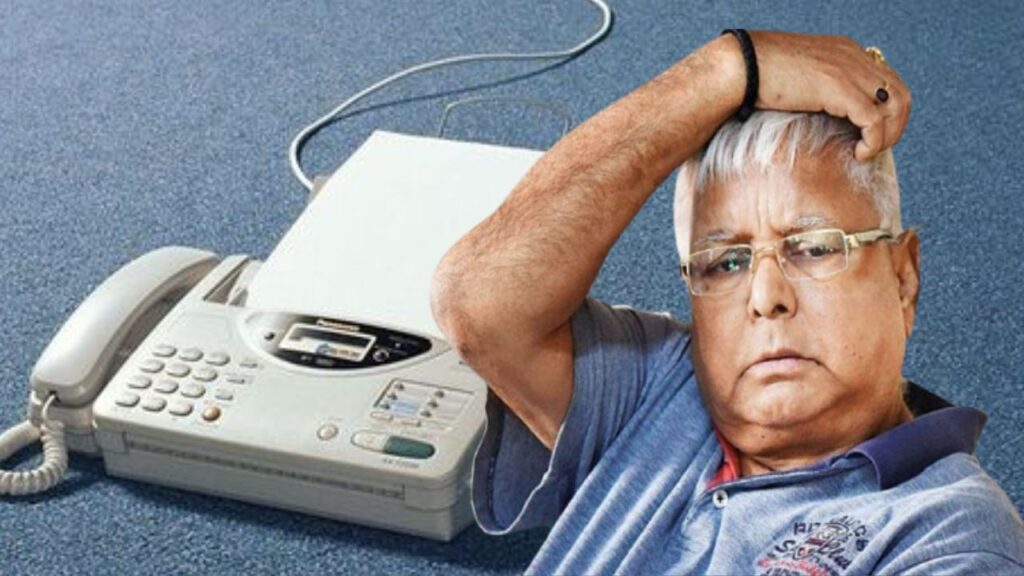
The story is about the night when the 11th President of India, Dr. APJ Abdul Kalam, was in Moscow, the capital of Russia. On one hand, his official visit was going on in Russia, and on the other hand there was a serious political crisis in the remote state of India, Bihar. After the February 2005 assembly elections, there was no clear majority in Bihar, causing political deadlock in the state. To end that situation, the recommendation to dissolve the newly elected assembly of Bihar was sent to Dr. Kalam through a fax. This recommendation created a major constitutional crisis in Indian politics.
In fact, Bihar Assembly Elections, 2005, had created a hung assembly position in the state.
• NDA got 92 seats, while RJD had to be satisfied in 75 seats.
• LJP had 29 seats, and this party became decisive, with the support of which the government was to be formed.
However, Paswan clearly denied the alliance with Lalu Yadav and had no intention of going with the BJP. Thus, the attempt to form the government in Bihar continued for months, so that Governor Buta Singh finally decided to impose President’s rule in the state.
‘Operation Ghatshila’ started to buy and sell MLAs
Not only the equation among political parties, but also the game of buying and selling MLAs was intensified. The NDA made constant efforts to bring LJP MLAs in its favor. Especially under a scheme called “Operation Ghatshila”, rebel MLAs of LJP were hidden in a farm house in Ghatshila, Jharkhand. During this period, there was several ups and downs in the “parade” of MLAs between JDU and NDA.
Report and President’s signature
On 21 May 2005, Governor Buta Singh sent his report to the President, in which Bihar’s political status was called “ugly picture of democracy”. He recommended dissolution of the assembly to end this situation. In the language of the report, the situation in Bihar was presented in a very serious form.
On the night of 22 May, when the UPA government was completing one year of its tenure, Prime Minister Manmohan Singh called an emergency cabinet meeting to approve the report. Since President Dr. Kalam was in Moscow at that time, the cabinet recommendation was sent to him through fax. Dr. Kalam had three options:
1. To sign immediately.
2. Wait until returning to India.
3. Sending the recommendation back for reconsideration.
Dr. Kalam chose the first option and signed the recommendation at midnight, with this decision the process of dissolving the Bihar Legislative Assembly was implemented.
Case went to Supreme Court
After this decision, the NDA called it a “murder of democracy” and filed a case in the Supreme Court. The NDA argued that the Governor’s report was based without any concrete facts and the majority should have been decided on the floor of the assembly, not in the closed doors of the Raj Bhavan. The central government argued that the Governor’s intervention was his constitutional duty.
On 7 October 2005, the Supreme Court gave its historic verdict. The court termed the decision to dissolve the Bihar Legislative Assembly as unconstitutional, but the election process had started, so the assembly could not be restored. The decision further exposed the seriousness of the case.
NDA won bumper in new election
The new elections held in October-November 2005 gave a clear mandate in the state. The NDA alliance got an overwhelming majority and eventually ended the 15-year-old Lalu-Rabri rule.
Subsequently, the Supreme Court’s decision and sharp comments increased the pressure on Governor Buta Singh to resign, and on 26 January 2006 he resigned from his post.
Dr. Kalam’s pain
In this entire incident, the image of President Dr. Kalam was hurt the most. According to his press secretary SM Khan, Dr. Kalam was so hurt by the decision that he thought of resigning. Prime Minister Manmohan Singh explained to him that if he resigns, a constitutional crisis will arise in the country. Dr. Kalam did not resign, but this incident always left a twilight in his heart.