
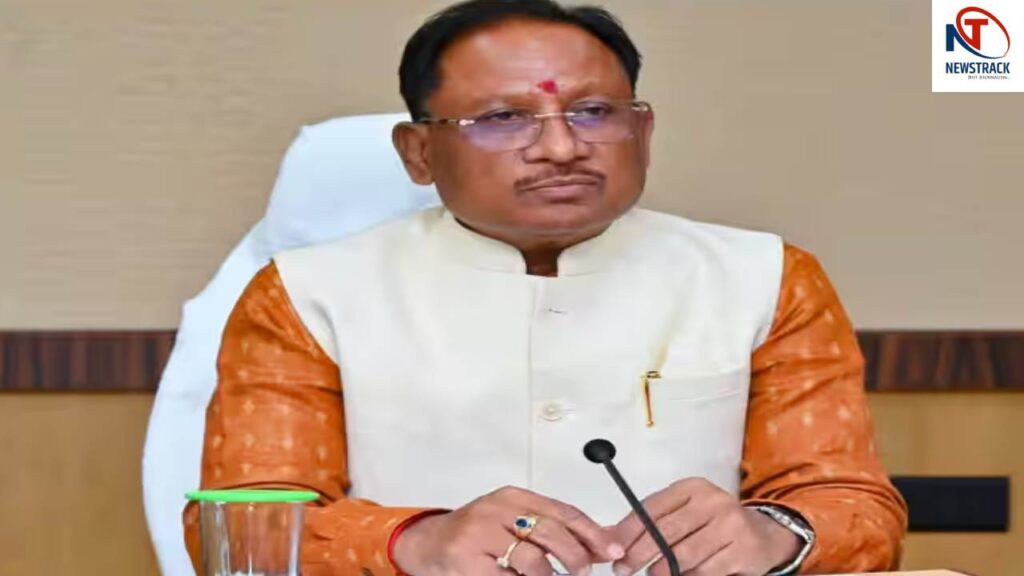
Chhattisgarh: A huge and historic turning point has come in the politics of Chhattisgarh. The Sai government has put in all its strength to implement the Uniform Civil Code (UCC) in the state. Taking the first and strongest step in this direction, the government has constituted a high-level committee, which will prepare the outline and complete draft of this law in the state. The command of this very important committee has been handed over to retired Supreme Court judge Ranjana Prakash Desai. Under his able supervision, this special team has started preparing the complete blueprint of UCC keeping in mind the geographical and social situation of Chhattisgarh.
Team of experienced veterans will take charge
This high-profile committee includes not only legal experts but also great experts in administrative matters. Along with retired judge Ranjana Prakash Desai, this team includes two very experienced retired IAS officers Shyamdhar Singh and M.K. Raut has been given place. Apart from these, senior advocates Mohan Pawar and Jyoti Rani Singh have also been nominated as members of this committee to resolve the legal complications. This entire team together will create a legal framework that is completely fair, keeping in mind the interests of every section of the state.
There will be discussion on everything from marriage to property.
This committee will closely study all the existing laws mainly on very sensitive and family matters like marriage, divorce, alimony, division of property, inheritance and child adoption. To make this process completely transparent and all-inclusive, suggestions and opinions will be sought directly from the general public, intellectuals and different social organizations of Chhattisgarh. Only after listening to all the parties and understanding their apprehensions, the committee will prepare the final draft and submit its main recommendations to the state government.
The model of three states will be deeply investigated
Before Chhattisgarh, the system of Uniform Civil Code has been implemented in 3 states of India i.e. Uttarakhand, Assam and Gujarat. This new committee of Chhattisgarh will study in depth the legal systems already running in these three states and the experiences there. After including the good experiences there, the final draft prepared by the committee will be sent to the Government of Chhattisgarh. After this, the government will table this draft in the form of a bill, from where after passing it will take the form of an official law in the entire state.
What is this law and why is there a stir?
At present, in our country, the rules related to family matters are completely different for different religions and castes, which are called personal laws. But after the implementation of the UCC law, the same rules will apply to every citizen living within the state borders, irrespective of religion, caste, gender or traditional community. This mainly includes serious issues like age of marriage, ban on polygamy, equal rights for daughters in ancestral property and live-in relationships, which is expected to bring greater equality in the society.