
New Delhi, 20 September (IANS). According to the central government, India is moving from ‘device assembly’ to advanced design and chip manufacturing and the upcoming 2 NM chip production ‘milestone’ is an important step towards technical self -sufficiency.
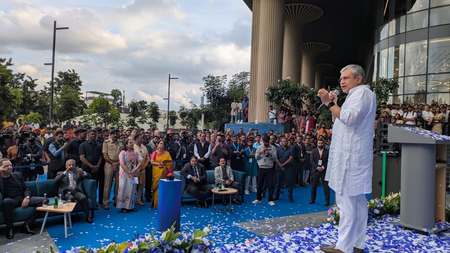
Union Minister Ashwini Vaishnav inaugurated the new semiconductor design office of ARM in Bengaluru this week. This office will focus on Next-Jenere 2 Nanometer Chip Technology, which is an important step in India’s semiconductor trip.
For the first time 2 Nm chip is being designed in India. This technology will support the Next-generation device in AI, mobile computing and high-performance systems.
According to an official statement, “Thin chips mean more processing capacity and mild products in less space. Small transistors allow better efficiency and low power consumption. They are strategically important for national security, space exploration and defense application.”
According to the statement, the number of total projects sanctioned under the India Semiconductor Mission has now increased to 10 in six states, with a total investment of Rs 1.6 lakh crore. There is a provision of Rs 76,000 crore in the India Semiconductor Mission to strengthen ecosystem.
In May 2025, Union Minister Vaishnav inaugurated two state-off-the-art semiconductor design centers in Noida and Bangalore. These are the first centers in India focused on advanced 3-nenometer chip design.
The Union Minister said that while India had earlier achieved 7 Nm and 5 Nm design, reaching 3 Nm is a new twist in innovation. India is now moving towards 2 Nm chip technology.
The global semiconductor industry is expected to reach $ 1 trillion by 2030, while India’s domestic market is expected to reach $ 100–110 billion by 2030.
Design linked incentives (DLI) are giving speed to domestic startup chip design supported under the scheme. At least 23 chip design projects have been approved and 72 companies are now using advanced design tools.
Students innovation is also increasing with the 28 chips tape out by teams from 25 institutes. About 278 institutes and university semiconductors are engaged in design and research, making a large talent pool being constructed.
-IANS
SKT/