
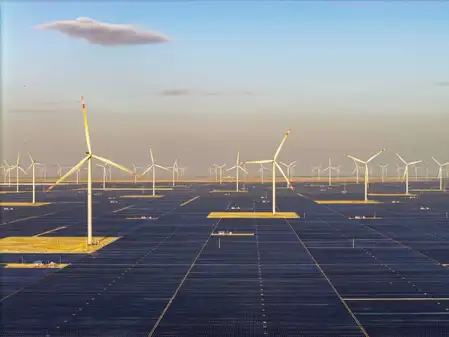
Ahmedabad, April 1 (IANS). Adani Green Energy Ltd (AGEL) on Wednesday said it has added more than 5 gigawatts (5,051 MW) of renewable energy capacity in fiscal 2025–26. With this, the total operating capacity of the company has increased to 19.3 gigawatt (GW).
This achievement is believed to be the largest greenfield capacity addition in a year by any company in the world except China.
The newly added capacity includes 3.4 gigawatt (3,409 MW) of solar power, 0.7 gigawatt (686 MW) of wind power and 1 gigawatt (956 MW) of wind-solar hybrid capacity.
According to the country’s largest pure renewable energy company, this new capacity will help reduce carbon emissions by about 10 million tonnes every year. AGEN’s total capacity of 19.3 GW will be able to offset 36 million tonnes of carbon emissions annually.
“Adding more than 5 GW of new capacity is a significant turning point for India’s renewable energy sector. This will position India globally as a clean energy leader and help accelerate the transition to a low-carbon economy,” said Sagar Adani, Executive Director, AGEN.
He further added, “This achievement is a strong step towards our target of 50 GW capacity by 2030. At the same time, we are driving sustainable and inclusive growth through renewable energy and energy storage solutions.”
Most of the new capacity has been added to the world’s largest renewable energy plant being built in Khavra, Gujarat, which is being developed at a fast pace.
Spread over 538 square kilometers, this project is about five times the size of the city of Paris. The target is to install 30 gigawatt capacity in Khavra by 2029, of which the company has so far installed 9.4 gigawatt (9,413 MW) capacity.
Additionally, the company has also commissioned 1,376 megawatt-hour (MWh) of Battery Energy Storage System (BESS) capacity at Khavra, one of the largest single-location projects in the world. This work was completed in just 8 months, which will help in grid stability and better utilization of renewable energy.
Advanced bifacial solar modules have been used in the Khawra project, which generate electricity by taking sunlight from both sides. Also the production is maximized by using solar trackers.
The company said that 5.2 MW wind turbines have been installed in it, which are among the most powerful onshore turbines in the world. Additionally, waterless robotic cleaning systems are being used, which requires almost zero water to clean solar panels and increases the efficiency of operation.
–IANS
DBP