
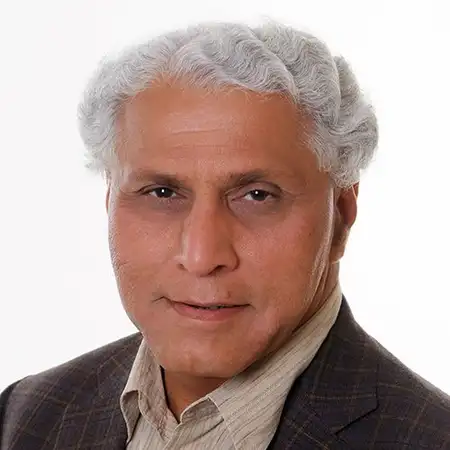
Washington, January 31 (IANS). Artificial Intelligence is progressing so fast that the policy decisions taken by the governments in the coming few years will decide how the country’s economy will grow, how much power it will have in the world and whether there will be stability in the society or not. Technology entrepreneur Romesh Wadhwani said this.
Delivering the keynote address at a major CSIS conference ahead of India’s upcoming AI Impact Summit, Wadhwani said AI is entering a new era, defined by autonomous “AI agents” that are capable of planning, executing and learning with limited human supervision.
Referring to early generative AI tools, Wadhwani said, “What was a breakthrough technology three years ago now seems obsolete. The world is moving towards AI agents that can assist, replace and eventually surpass human workers.”
Wadhwani said that less than 5 million AI agents existed in 2025, but in the next five years they could increase by more than 200 percent every year. In the coming time, these AI agents will work together, replace humans in many tasks and will be able to handle the entire business operation.
He clearly said that this is not a fantasy after 50 years, but a change that will happen in just five years.
Wadhwani said that governments are not able to make rules as fast as AI is progressing. He compared it to the invention of the telephone, where policies were made decades after the technology was introduced.
According to him, AI-related policies will impact five major areas—geopolitics and national security, economic growth, business competitiveness, pace of innovation and social stability. He said that AI policy will decide who will win and who will be left behind.
Comparing different countries of the world, he said that America is promoting innovation with light regulations, Europe is emphasizing on strict regulations through its AI law, while China is adopting a policy of compulsory adoption of AI under political control.
Regarding India, Wadhwani said that the focus here is on economic development and use of AI on a large scale. He described India as the land of practical innovation through AI.
He says that India is focusing on use-based AI solutions instead of expensive and complex models. Along with this, new skills are being taught to people on a large scale and the rules have been kept relatively low. India aims to be among the top three AI powers in the world after the US and China.
Wadhwani estimated that AI could contribute $1 to $1.5 trillion to India’s GDP in the next five years. Although automation will eliminate some jobs, it will also create millions of new jobs.
He said that the AI Impact Summit being held in India shows that the discussion on AI at the global level is no longer limited to just ideas, but is focusing on its real use, which especially focuses on the results of implementation and development for the Global South.
–IANS
AS/