
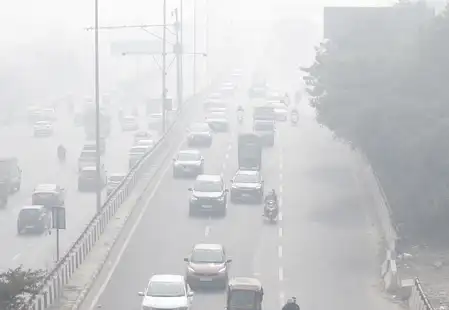
New Delhi, December 18 (IANS). The problem of air pollution in Delhi has reached its peak. Experts said on Thursday that it is not only having a negative impact on health, but is also severely affecting life expectancy and quality.
These days Delhi-NCR is trapped in dense smog. This shows dangerous levels of air pollution. Visibility from residential areas to roads and airports is minimal, affecting daily commute and increasing health concerns of the people living here. According to Central Pollution Control Board (CPCB) data, the air quality index (AQI) in Delhi was recorded at 356.
Experts said that due to long-term exposure to air pollution, serious health problems like stroke, cardiovascular disease, respiratory disease and neurological disorders are increasing rapidly. We are also facing financial loss. Health problems are reducing productivity, increasing medical costs, and affecting tourism and trade, reducing overall quality of life.
Due to this, the pressure on the healthcare system is continuously increasing.
Rajesh Bhushan, former secretary of the Ministry of Health and Family Welfare, said, “Prolonged exposure to polluted air not only reduces life expectancy and increases the risk of living with any long-term physical disease. People in highly polluted cities may live longer, but chronic diseases can have a negative impact on their lives. Productivity decreases, quality of life decreases and thus such people are also able to contribute less to the economy.”
“Therefore, there is a need to take coordinated action between the healthcare system, urban planning and public awareness to tackle air pollution, with greater focus on preventive and primary healthcare,” he said at an event organized by the ‘Illness to Wellness’ Foundation.
Delhi’s pulmonologist Dr. G. C. Khilnani described air pollution as a “man-made public health emergency” that has the potential to have widespread impacts on respiratory and cardiovascular health.
“The most dangerous effects of air pollution are often invisible—very small particles can travel deep into the lungs, enter the bloodstream, and cause damage to multiple organs without any early warning,” he said.
Neurologist Dr. Daljeet Singh said that pollution affects the blood circulation in the brain and significantly increases the risk of both ischemic and hemorrhagic strokes.
Singh further added, “We are now seeing a clear seasonal increase in stroke cases in high pollution months, which suggests that pollution is emerging as an independent risk factor. Apart from stroke, air pollution is also linked to neurological conditions like Alzheimer’s, dementia and Parkinson’s disease, making it a growing neurological challenge that needs urgent attention.”
FICCI Health Sector Mentor Dr. Harsh Mahajan said that air pollution has become a silent risk factor increasing the category of almost every disease. Mahajan said, “It affects the poor, children and those working outside the most, even though they have the least contribution to the problem. The dangerous thing is to believe that technology alone will solve this crisis. But what is most lacking is seriousness and accountability.”
Experts stressed the need for commitment, enforcement of strict rules and informed public participation to ensure healthy lives and a strong economy.
–IANS
kr/