
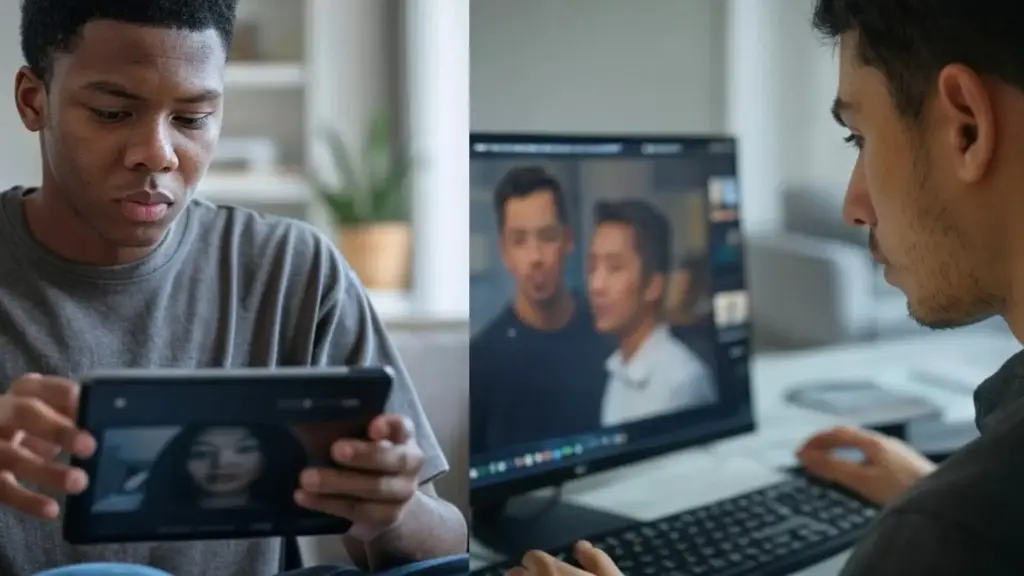
Nowadays, it has become difficult to blindly trust the videos and photos coming on social media. Sometimes a fake statement of a leader goes viral, and sometimes a deepfake video of a common man goes viral. AI tools have made content creation easier, but they have also opened the doors to lies and deception. Often users don’t know whether what they are seeing is real or machine-made.
To control this problem, the government has implemented new rules on AI-generated content. The responsibility has now been placed on both social media companies and users. It will be important to tell which content is created with AI. Immediate action will be taken against fake and misleading content. Simply put, the government has now tried to stop the spread of fake videos and photos on the internet. Let us understand the current rules for AI-generated content in India in five points.
Labeling is required for 10% of any AI visual
According to the rules, 10% of any AI-generated visuals must be labeled. Audio and video clips will also be labeled 10% to let users know the visuals are made with AI. The platform will have to ask every user whether the video being uploaded is synthetic or not. For this, these platforms will have to use verification tools. Users will be reminded about the penalties for violating the rules every three months.
1. Tagging AI content will now be mandatory
If a video, photo or audio is created with AI, it cannot be posted anonymously. Social media companies will have to display clear labels on such content so that users can understand that it is not genuine.
2. Fake and false AI content will be removed within 3 hours
If a platform detects the spread of deepfakes or misleading AI content, it must remove it within three hours. Earlier this time limit was 36 hours. Now, the responsibility of any delay will be directly on the company.
3. Users will have to tell whether the content is created by AI or not
Now, when posting, users will have to indicate whether the content is generated by AI or not. Platforms will not depend on this alone. Companies will also have to use technology to verify whether the user is telling the truth or not.
4. Strictness on AI content and private images related to children
Inappropriate content related to children, unauthorized photos or videos, fake documents, and AI content depicting violence will now be removed directly under the rules. In such cases the platform will not have to wait.
5. Action will be taken on the platform if rules are broken
If social media companies do not follow these rules, their legal protection may be lost. This means that now not only the users but also the platforms will be responsible.