
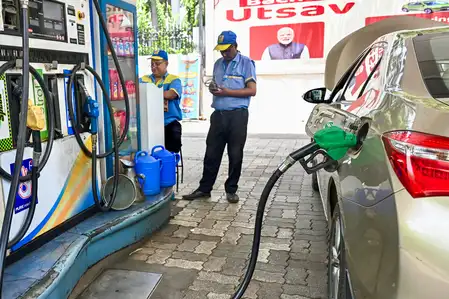
New Delhi, May 23 (IANS). The reduction in Special Additional Excise Duty (SAED) on petrol and diesel on March 27, 2026, put a burden of about Rs 30,000 crore on the central government exchequer in the current financial year. However, the impact of increased crude oil prices was not passed on to consumers and this burden was borne by the government itself.
Following the cut in SAED amid disruption in the Strait of Hormuz, excise duty on petrol was reduced to Rs 3 per litre, while excise duty on diesel was reduced to zero.
Congress argues that in May 2014 the price of petrol was around Rs 71 per litre, whereas today it is around Rs 98 per litre. The party is calling this difference as evidence of higher tax collection.
However, according to sources, this argument depends on the perspective from which the price of May 2014 is viewed. That price was not the actual supply cost of petrol. That price was created when the UPA government issued oil bonds worth about Rs 1.34 lakh crore to public sector oil marketing companies between 2005 and 2010 to compensate for the price difference.
The 2014 price was actually a deferred tax burden passed on to the next generation of consumers. Prime Minister Narendra Modi government is paying these bonds. The government has paid about Rs 10,000 crore in the financial year 2021-22, Rs 31,150 crore in 2023-24, Rs 52,860 crore in 2024-25 and Rs 36,913 crore in 2025-26. Apart from this, interest worth thousands of crores of rupees has also been given.
According to sources, the price which Congress is giving today was being paid by the present government on behalf of the previous government for the last many years.
The current government took a different approach to handle the price shock.
When crude oil prices increased in 2022 and again in 2026, the central government reduced excise duty on petrol and diesel.
This cut was made in a straightforward, transparent manner and within the budget, the effect of which was visible at petrol pumps within a day. The government itself accepted the shortfall in revenue. According to sources, no new bonds were issued and no additional burden was placed on future taxpayers.
–IANS
DBP