
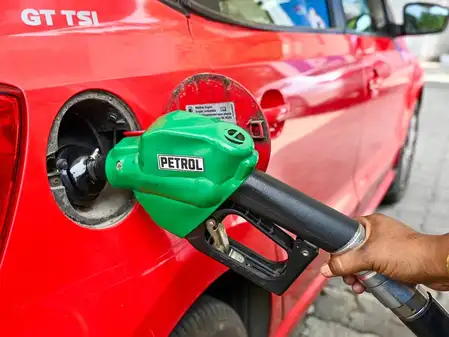
New Delhi, July 3 (IANS). The scope of use of ethanol mixed petrol (E20) is continuously increasing in India. Meanwhile, many claims regarding E20 fuel like its impact on water consumption, food safety, vehicle performance, engine safety and environment are becoming increasingly viral on social media. However, according to scientific studies, technical assessments and clarifications issued by the government, most of these claims are either misleading or factually incorrect.
One of the most widely circulated claims on social media is that 10,000 liters of water is required to produce one liter of ethanol. According to the government, this claim is not based on facts.
Government data states that in this claim the entire agricultural water consumption of crops like paddy is linked to ethanol production, whereas this is not the case. Crops like paddy and wheat are grown mainly due to Minimum Support Price (MSP) and procurement system of Food Corporation of India (FCI) and not just for ethanol production.
According to the government, modern ethanol plants require only 3 to 5 liters of industrial water to produce one liter of ethanol. Also, water is recycled on a large scale through Zero Liquid Discharge (ZLD) technology.
Another claim made about E20 is that it is a new and untested experiment. The government has rejected this also.
According to government agencies, ethanol has been used as a transportation fuel for more than 100 years. In 1908, Henry Ford’s famous Model T car was designed to run on ethanol, gasoline, kerosene, or a mixture of these.
Today, E10 is the common fuel in the US, and blends such as E15 and E85 are also widely used. E27 is already mandatory in Brazil and there it has been decided to increase it to about 35 percent. More than 80 percent of new cars sold in Brazil are flex-fuel vehicles.
Apart from this, Canada, Thailand, Japan and many European countries are also using ethanol blended fuel. In such a situation, the government says that India’s E20 program is in line with the model already established globally.
Many apprehensions have also come to light regarding the mileage of vehicles.
The joint study conducted by the Automotive Research Association of India (ARAI), Indian Oil Corporation (IOCL), Indian Institute of Petroleum (IIP), Dehradun and the Society of Indian Automobile Manufacturers (SIAM) conducted tests for 40,000 km on passenger cars and 20,000 km on two-wheelers.
The study found that the use of E20 had no significant negative effects on vehicle performance.
Claims related to engine safety and corrosion were also technically investigated.
Since 2014, ARAI has conducted detailed trials in collaboration with IOCL, IIP and SIAM on the instructions of the government. These tests evaluated driving performance, ability to start in cold weather and compatibility of metal and plastic parts.
According to the report, no technical problems were encountered in these.
Environmental benefits were also recorded in the same study. Carbon monoxide emissions were found to be reduced by about 50 percent in two-wheelers and by about 30 percent in four-wheelers. At the same time, emissions of unburned hydrocarbons also decreased by about 20 percent.
Some social media posts claimed that using E20 fuel could void the vehicle’s insurance policy or company warranty. The government has declared this to be completely wrong. According to him, both insurance companies and vehicle manufacturers have clarified that using E20 fuel with prescribed standards will neither invalidate the insurance nor void the warranty of the vehicle.
SIAM has also clarified that the warranty will be fully applicable on vehicles running on E20. The Fact Check Unit of Press Information Bureau (PIB) has also termed such claims as false.
In recent times, such videos also went viral on social media, in which it was claimed that due to the presence of sugar in ethanol, ants and bees accumulate on the fuel cap of the vehicle.
Bharat Petroleum Corporation Limited (BPCL) rejected these claims and said that fuel grade ethanol is prepared through the process of fermentation and distillation, in which the remaining sugar is completely eliminated.
Apart from this, denaturants are added to ethanol, which keep insects away. After mixing with petrol, its hydrocarbon smell remains dominant, hence there is no reason to attract insects.
Some media reports claimed that the government had approached the Supreme Court describing the E20 program as an “experiment”. To this, the Attorney General of India’s office clarified that the case in the court pertained only to the contracts and allocation arrangements related to purchases by oil marketing companies from ethanol plants.
The office clarified that nowhere in the court had the E20 program been described as an “experiment” and appealed to the media to report the judicial proceedings accurately.
The Ministry of Petroleum and Natural Gas also termed as false the claim that E20 fuel allows water to enter the fuel tank of the vehicle.
According to the ministry, water reaching the fuel tank is harmful for any type of fuel, but modern vehicles have safety measures that prevent such a problem.
Some videos on social media also showed that sugarcane juice is being mixed directly into petrol or that ethanol mixed petrol is divided into different layers.
The government has termed these videos as fake and misleading.
The government has also responded to allegations of ethanol plants exploiting groundwater, causing pollution and harming agriculture.
The government says modern ethanol plants operate under strict environmental standards and their operations are constantly monitored.
According to the government, the Ethanol Blended Petrol Program has shown many positive results from the ethanol supply year 2014-15 to May 2026.
According to official data, this program has saved foreign exchange of more than Rs 1.90 lakh crore. More than Rs 1.60 lakh crore has been paid to farmers. Additionally, 930 lakh metric tonnes of carbon dioxide emissions have been reduced and more than 310 lakh metric tonnes of crude oil imports have been substituted.
–IANS
DBP