
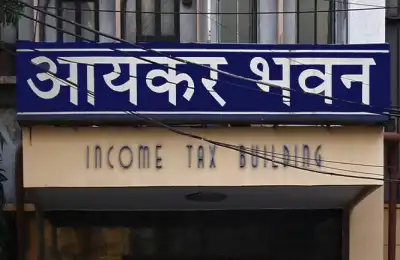
New Delhi, March 31 (IANS). With the beginning of the new financial year 2027 in India, there is going to be a major change in the direct tax system of the country from April 1, 2026. The new Income Tax Act, 2025 is going to come into force, which will replace the nearly 60-year-old law of 1961, and it has made several changes in the rules, terminology and tax regime.
The biggest change in the new system is that now there will be a single ‘Tax Year’ instead of ‘Financial Year (FY)’ and ‘Assessment Year (AY)’. This is expected to simplify the tax filing process and provide more clarity to the people.
Apart from this, the deadline for filing Income Tax Return (ITR) has also been changed. The deadline of July 31 will remain the same for salaried employees, but those who do not come under the ambit of audit (like self-employed and professionals), they will now get time till August 31.
Securities Transaction Tax (STT) on futures and options has been increased as per the decision announced by Finance Minister Nirmala Sitharaman, which will make derivative trading costlier.
The rules for claiming House Rent Allowance (HRA) have been made strict. Now in some cases it will be necessary to provide landlord information like PAN. Additionally, Bengaluru, Hyderabad, Pune and Ahmedabad have also been included in the list of cities with higher HRA exemption.
The government has also given some relief to the employees. Tax benefits related to meals have been increased and the annual limit for tax-free gifts has also been increased. In the old tax system, the exemption given on children’s education and hostel expenses has also been increased.
Now share buyback will be taxed as capital gain instead of dividend, which will impact investors. At the same time, tax exemption on Sovereign Gold Bonds will be available only on those bonds which were purchased during the original issue.
Under the new rules, now the loan interest taken on dividend or income from mutual funds cannot be claimed as tax exemption.
Now taxpayers can avoid TDS on multiple income sources by submitting a single declaration form. Now TAN will not be required for deducting TDS on purchasing property from NRI, only PAN will be required.
TCS on foreign travel has been reduced to 2 percent, while TCS on money sent abroad for education and treatment has also been reduced.
Now taxpayers will get time till March 31 to revise the returns, however, if delayed after December, additional charges will have to be paid.
Additionally, the interest received on compensation awarded by the Motor Accident Claims Tribunal is completely tax-free.
At the same time, the government has notified the income tax return forms (ITR-1 to ITR-7) for assessment year 2-26-27, which will help individuals, pensioners and other taxpayers to start filing their returns within the prescribed deadline.
Experts say the updated form includes some important changes. He said that income from two houses can also be shown in the ITR-1 (Sahaj) form, whereas earlier this limit was only one house. This is expected to make the filing process easier for many taxpayers.
–IANS
DBP