
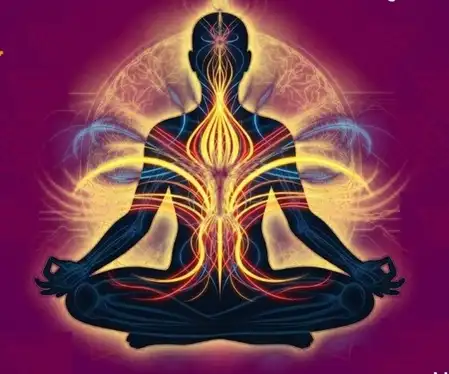
New Delhi, March 15 (IANS). According to Ayurveda and Yoga, 10 types of air (Prana) flow in the human body. This prana acts as life energy and controls all bodily functions. In Ayurveda, these pranas are considered part of the air element. These are divided into two main parts, which include main prana and sub prana.
There are 5 main pranas, which are also called Panchapranas and 5 sub-pranas. These airs conduct activities like breathing in and out, digestion, blood circulation, speaking, sleeping and waking up, sneezing, yawning, blinking etc. Their balance is essential for health.
According to Morarji Desai National Institute of Yoga, the main pranas or Panchapranas are responsible for the basic functions of the body.
The first is Prana whose location is the heart or chest area and its function is respiration (inhalation-exhalation), flow of life energy, control of the function of the heart and lungs. The second is Apana, whose place is the anus or pelvic area. Its function is Rechak-Kumbhaka, excretion of feces and urine, conducting energy towards the lower part of the body, controlling the excretion process. The third one is Samana and its place is the navel area. Its function is digestion, absorption of food, distribution of nutrients, balancing Agni (digestive power).
The seat of Udaan is the throat and it sees swallowing, vomiting, speech and upward flow of energy, brain function. The place of Vyana extends to the eyes and the entire body. Its function is blood circulation, blinking of eyes, all activities of the body, expansion of energy in the body.
The sub-pranas control small specific activities. The first of these is the serpent, whose space covers the entire body and whose function is to provide relief such as belching, movement or movement. The second is Kurma which spreads throughout the body including the throat. Its function is to perform contraction actions like absorption, growth, blinking etc. At the same time, the place of Krikar or Krikal is also throat and it is a sign of hunger and thirst, exclamation or sneezing, coughing.
Upa Prana also includes Devadatta, whose place is the mouth and function is yawning. Along with this, there is also Dhananjay, whose place is in the entire body and its function is to remain in the body even after death and prevent disintegration.
These vital airs are very important for the body. These can be balanced through pranayama, yoga and meditation, which improves digestion, breathing, mental peace and overall health. Imbalance can cause problems like gas, breathing problems, fatigue.
–IANS
MT/VC