
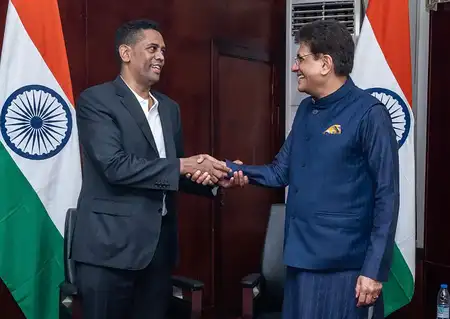
New Delhi, May 23 (IANS). India has consistently supported the membership of developing countries and ‘least backward countries’ (LDCs) into the World Trade Organization (WTO). In this context, bilateral accession protocol was signed in Geneva in the context of Ethiopia joining WTO.
According to the Commerce Ministry, the protocol was signed on behalf of India by Dr. Sentil Pandian C., Ambassador and Permanent Representative of India to the WTO and on behalf of Ethiopia by Ambassador and Permanent Representative of India to the United Nations Office at Geneva and other international organizations Tsegab Kebebu Daka.
Following the signature, the protocol and its appendices were formally assigned and deposited at the WTO Secretariat, the ministry said.
The ministry said that as Ethiopia pursues economic and trade policy reforms through the WTO accession process, new opportunities for trade, investment and business cooperation between India and Ethiopia are likely to emerge.
The agreement was swiftly executed under the guidance of Commerce and Industry Minister Piyush Goyal.
The WTO accession process requires aligning domestic economic and trade policies with WTO rules and negotiating market access commitments with existing members.
Ethiopia is currently in the advanced stage of its accession process, and its Executive Committee held its seventh meeting on 22–23 April 2026.
India believes that full integration of developing countries into the multilateral trading system and global value chains is essential to building a more inclusive and balanced global economy.
India is Ethiopia’s second-largest trading partner, and Indian companies are among the major foreign investors there.
During Prime Minister Narendra Modi’s visit to Ethiopia in December 2025, the bilateral relations between the two countries were given the status of strategic partnership.
–IANS
DBP