
New Delhi, March 4 (IANS). According to the government, India’s share in the global chemical sector is likely to increase to 5-6 percent by 2030 and by 2040 the sector can achieve the target of a turnover of $1 trillion.
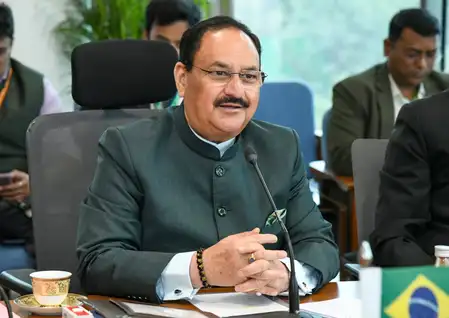
Union Minister JP Nadda said the budgetary provision of Rs 13,000 crore for the Bio-Pharma Shakti Scheme and three dedicated chemical parks in the country is a strategic investment in India’s future.
Addressing the post-budget webinar, he said that by 2035, 40 percent of the world’s medicines will be in the biologics category.
He said that patents worth about $300 billion are going to expire by 2030. In such a situation, now is the right time to move towards biologics and India is committed to face this challenge through Biopharma Mission. A budget of Rs 10,000 crore has been set for this mission in the next five years.
The minister said that if India achieves even just 1 percent share in the global biosimilar market, it could provide the country an opportunity of about Rs 2 lakh crore annually.
He also said that it is necessary to further strengthen institutions like NIPER by creating better coordination with talent and skill development. Developing 1,000 clinical trial sites across the country will boost research capacity and innovation.
Noting that the role of Central Drugs Standard Control Organization (CDSCO) is important for faster regulatory approval, the Minister said that this body will be further strengthened to support biosimilars and fermentation of medicines.
Nadda said that India’s chemical sector currently produces Rs 19.4 lakh crore and is in a strong position in sectors like dyes and agrochemicals, but the global share is currently only 3 percent.
Terming infrastructure as the biggest shortcoming, the minister said a provision of Rs 3,300 crore has been made to develop three chemical parks with world-class facilities in the country. These parks will have plug-and-play utilities, advanced waste treatment systems, integrated logistics and strong security arrangements.
These chemical parks are expected to reduce costs by 20 to 40 percent through industrial collaboration and promote circular economy at the design stage itself.
–IANS
DBP/