
Mumbai, September 18 (IANS). At the British Deputy High Commission in Mumbai, South Asia’s trade counselor Mark Birel expressed satisfaction with the Indo-Britain Free Trade Agreement (FTA) on Thursday, saying that he is very happy that the trade agreement is promoting positive dialogue between the businesses of the two countries.
Speaking to the news agency IANS in the CII program, Biral said that as we are moving towards the implementation of the ‘Free Trade Agreement’, it is already being felt that it is having a positive effect and we hope to be the same in the future.
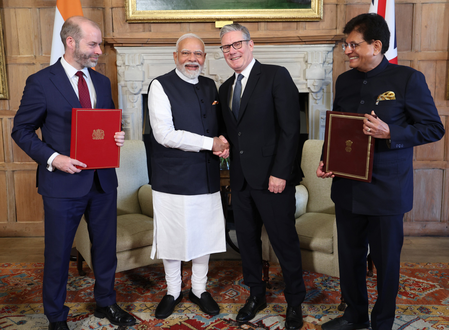
Birel appreciated the efforts of Indian Prime Minister Narendra Modi and British Prime Minister Kir Starmer to announce the trade agreement in Britain in early July.
He said, “This is really a strong relationship and I am happy that the leaders of the two countries were present in the UK to help in agreed in July.”
He added, “I think it was a very positive sign for relations between the two countries and it is expected that this positive relationship will continue in the future as well.”
When asked about the move by the US administration to impose 50 percent tariff on Indian goods, Birel refused to comment.
Biral said, “I will not comment on the Indo-US tariff, but I am glad that there has been a free trade agreement between Britain and India and we have agreed to it, which will have a positive impact on the trade relations between the two countries.”
He said that the free trade agreement reduces tariffs, reduces non-tariff barriers, but it also gives wide positive indications about strong trading relations between Britain and India.
In a separate conversation with IANS on the same program’s sideline, Cheong Ming Fung, Consideration of Consulate General of Singapore, emphasized that India’s role in the global trade system remains important.
Cheong said, “India’s role in global trade is more important than ever before. With its huge domestic markets, green resources and digital capacity, India is in a position to give direction to the future of global trade and economic integration.”
-IANS
SKT/