
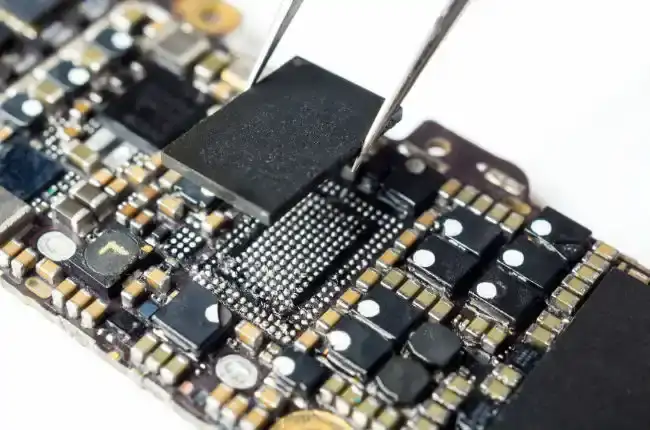
In today’s world, smartphones are no longer just a way to make calls or send messages. Features like social media, online gaming, video editing, digital payments and artificial intelligence have turned phones into powerful mini-computers. But the most important component behind all these functions is RAM. Often, people pay attention to the camera and battery when buying a phone, but they do not fully understand the importance of RAM.
RAM stands for Random Access Memory. This is your phone’s temporary memory where data from running apps and processes is stored. The more RAM a phone has, the more apps can run simultaneously and more smoothly, resulting in better overall performance.
How does RAM work?
When you open an app on your phone, important data is transferred from storage to RAM. RAM is much faster than storage, which is why apps open quickly and run without lag. RAM is cleared as soon as you close the app or restart your phone. If RAM is low, the phone may frequently close apps, run background processes, and users may experience lag or freezing issues. This is the reason why today phones with 8GB or 12GB RAM are becoming increasingly popular.
Why is the need for RAM in smartphones increasing?
A few years ago, phones with 2GB or 3GB of RAM were enough. But now, apps have become more resource-intensive, games have higher-end graphics, and operating systems require more resources. 5G, AI features, camera processing and multitasking are continuously increasing the demand for RAM. Today, 8GB of RAM is common even in mid-range smartphones, while the premium segment has 12GB to 16GB of RAM.
Why is lack of RAM becoming a big problem?
Recently, concerns have increased regarding the supply of RAM in the global market. Fluctuations in the semiconductor industry, increasing demand and limited production capacity are affecting the availability of RAM chips. Additionally, the demand for RAM in AI servers, data centers and laptop markets has increased rapidly, putting pressure on the smartphone industry. When demand for something is high and supply is less, its price is bound to increase. The same is happening with RAM chips.
How will the increase in RAM prices affect smartphone prices?
The increase in the price of RAM has a direct impact on the overall cost of the smartphone. The phone’s processor, camera and display are already becoming expensive. Now, if RAM also becomes expensive, it will be difficult for companies to launch phones at lower prices. It is likely that phones with 6GB or 8GB RAM will become more expensive in the future. In the budget segment, companies will either reduce the amount of RAM or increase the price.
What will change for budget smartphone users?
The shortage of RAM and increase in price will have the biggest impact on those buying budget smartphones. Earlier, 6GB RAM was available for Rs 10,000-12,000, but now, at the same price, options may be limited to 4GB RAM. Some companies are trying to fill this gap through software features like virtual RAM, but it is not a complete substitute for real RAM. Virtual RAM uses storage that is not as fast as real RAM.
What will happen in the premium smartphone segment?
Premium phones are already expensive, so the impact of increasing RAM prices may be less visible there. However, a slight increase in prices for flagship phones can still be expected. High-end variants like 16GB RAM can be even more expensive. Companies can also offer less RAM in the base variant and sell models with more RAM at a more premium price.
Changes in RAM technology
Smartphone RAM is changing not only in quantity but also in technology. This journey has reached from LPDDR4 to LPDDR5 and now LPDDR5X. Newer RAM technology is faster, more power-efficient, and more expensive. As companies adopt new technologies, costs will increase, and this will be reflected in the price of the phone.
What should users do? If you are planning to buy a new smartphone, do not ignore RAM. Considering future needs, it might be wise to choose a phone with at least 8GB of RAM. However, it is not necessary to buy an unnecessarily expensive phone just for the sake of more RAM. It is important to strike a balance between your needs and usage.
RAM is the backbone of smartphone performance. With growing technology and increasing needs of apps, the need for more RAM is constantly increasing. Meanwhile, RAM shortage and rising prices could make smartphones even more expensive in the future. Therefore, users will have to make informed decisions, and companies will also have to strike a balance between price and features.