
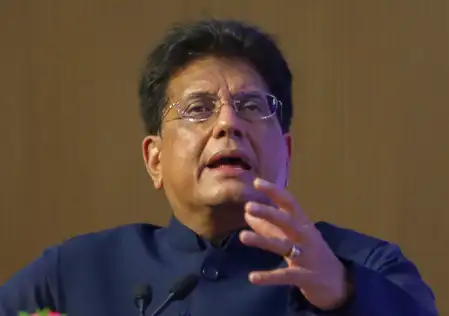
New Delhi, July 17 (IANS). Union Commerce and Industry Minister Piyush Goyal on Friday described the launch of India’s first indigenous hydrogen-powered train as a historic moment for the country’s green mobility journey. He said that this is a big step towards a clean and self-reliant transport system.
Union Minister Piyush Goyal posted on social media platform “It’s a huge step towards a cleaner, greener future.”
He wrote, “Inspired by Prime Minister Modi’s vision of innovation-led, net-zero growth and supported by the indigenous hydrogen storage and refueling infrastructure developed in Jind, India proudly joins the select few countries that are taking new initiatives in the field of sustainable rail transport and setting new standards in clean mobility.”
The country’s first hydrogen train will initially run on the 89 km long Jind-Sonipat section of the Northern Railway. It has been designed, engineered and integrated in India. It was built using indigenous technology, reflecting the country’s growing capabilities in advanced railway engineering. With this, India will join the select group of countries that have hydrogen-powered trains in operation.
This train has two hydrogen driving power cars and eight trailer coaches, and each power car generates 1,200 kilowatts of electricity. Designed to carry approximately 2,600 passengers, the train can run at a maximum speed of 110 kmph, making it one of the largest hydrogen-powered passenger trainsets developed worldwide.
To support operations, Indian Railways has created the country’s first integrated railway hydrogen ecosystem at Jind, where hydrogen is produced through electrolysis, compressed for storage and supplied through a special refueling system.
Several safety systems have been installed in the project, including hydrogen leak detectors, flame, heat and smoke sensors, continuous ventilation and automatic shutdown systems. According to the Railway Ministry, the system follows Petroleum and Explosives Safety Organization (PESO) standards and international safety regulations.
–IANS
DCH/