
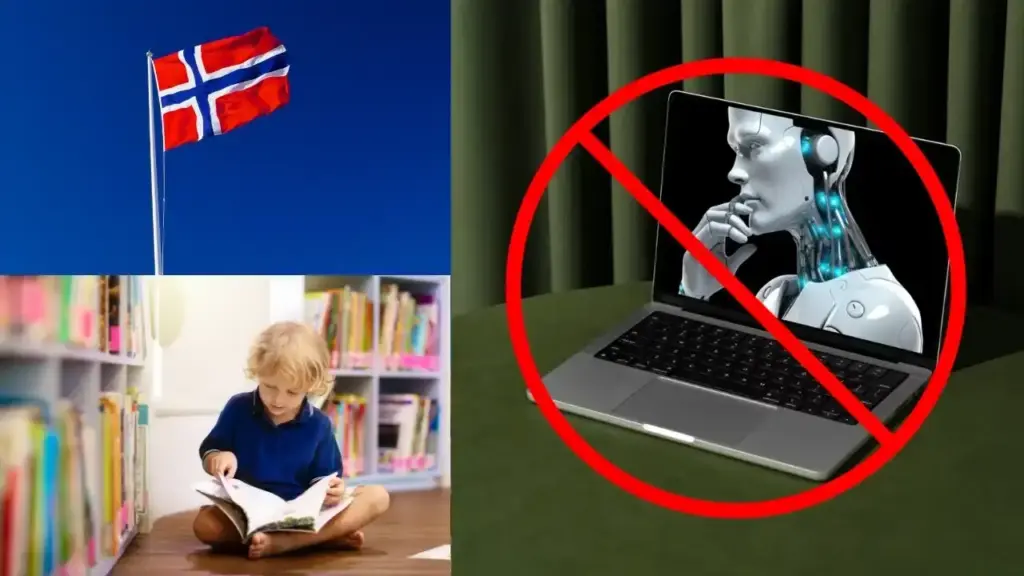
After the ban on social media, now AI chatbots for children are also being banned. Norway has taken the lead by banning generative AI tools in classrooms for children from first grade to seventh grade (typically age 13). The government has announced that students in these classes will not be given access to generative AI tools; This order will come into effect from September this year. It is noteworthy that other countries including England and Australia have already banned social media for children below 15 or 16 years of age.
Why was AI banned?
The Norwegian government says that this ban has been imposed to protect the basic learning abilities of children. Although the government acknowledges that AI can help with learning in some cases, it believes that young children should first master reading, writing, and math without relying on AI. Research shows that indiscriminate use of generative AI in schools risks children missing out on important learning stages; Furthermore, children often lack the critical thinking skills needed to use AI responsibly.
What are the rules for children over 13 years of age?
The ban on AI tools applies to children under 13, but students over this age will not get unlimited access. Students over the age of 13 will be allowed to use AI tools, but their use will be monitored. Apart from this, teachers will be given training related to AI. It is noteworthy that mobile phones are already banned in schools there. After the ban on AI, now preparations are underway to limit social media access for children under 16 years of age.
Canada is also preparing to ban AI chatbots
Like Norway, Canada is also preparing to ban social media and AI chatbots for children. A new law will be brought for this. The government says that social media platforms and AI chatbots are designed to keep users constantly engaged, and this has a negative impact on the mental health of children.