
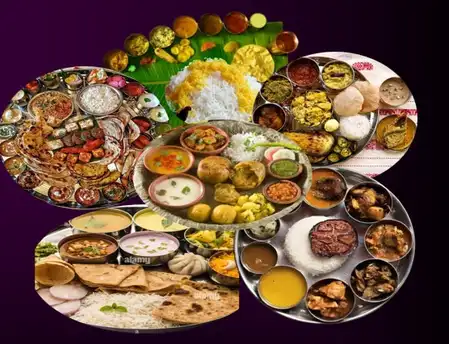
New Delhi, December 10 (IANS). According to a new study, almost half (about 50%) of the protein consumed at home in India is coming from grains like rice, wheat, semolina and maida. This trend is affecting the quality of nutrition.
In this report released by the Council on Energy, Environment and Water (CEEW), it has been said that the quality of nutrition is being affected because the protein in cereals is very ‘low’. On an average, protein consumption in Indian households is 55.6 grams per day, but the bulk of it depends on cereals.
The study also found that consumption of vegetables, fruits and pulses is decreasing while oil, salt and sugar are being used more.
“This study points to a silent crisis in India’s food system: over-reliance on low-quality proteins, excess calories from grains and oils, and low consumption of nutrient-dense foods. Diversity from fork to farm should be prioritized at the national level,” said CEEW researcher Apoorva Khandelwal.
He further said, “In a week, a person from the poorest stratum is drinking just 2-3 glasses of milk and eating fruits equivalent to just two bananas, while people from the richest stratum eat 8-9 glasses and 8-10 bananas. These differences in consumption show huge disparities.”
This study is based on data from the latest 2023-24 NSSO Household Consumption Expenditure Survey (HCES).
This revealed that the diet of Indians is still heavily skewed towards grains and cooking oil, both of which create major imbalances in nutrition.
About three-quarters of carbohydrates come from cereals, and direct cereal intake remains at 1.5 times the RDA, which is further bolstered by the widespread availability of rice and wheat subsidized through the PDS in low-income areas.
In particular, coarse cereals like jowar, millet and ragi have seen the steepest decline at home (about 40 per cent decline in per capita consumption over a decade), resulting in barely 15 per cent of the recommended dietary intake for Indians.
“Over the past 10 years, the share of households consuming more than 1.5 times the recommended fat intake has more than doubled, with higher-income households consuming almost twice as much fat as lower-income households,” the study said.
The study recommends reforming major public food programs (which include PDS, PM Poshan, and Saksham Anganwadis and Poshan 2.0) to include coarse cereals, pulses, milk, eggs, fruits and vegetables beyond the usual grains.
–IANS
kr/