
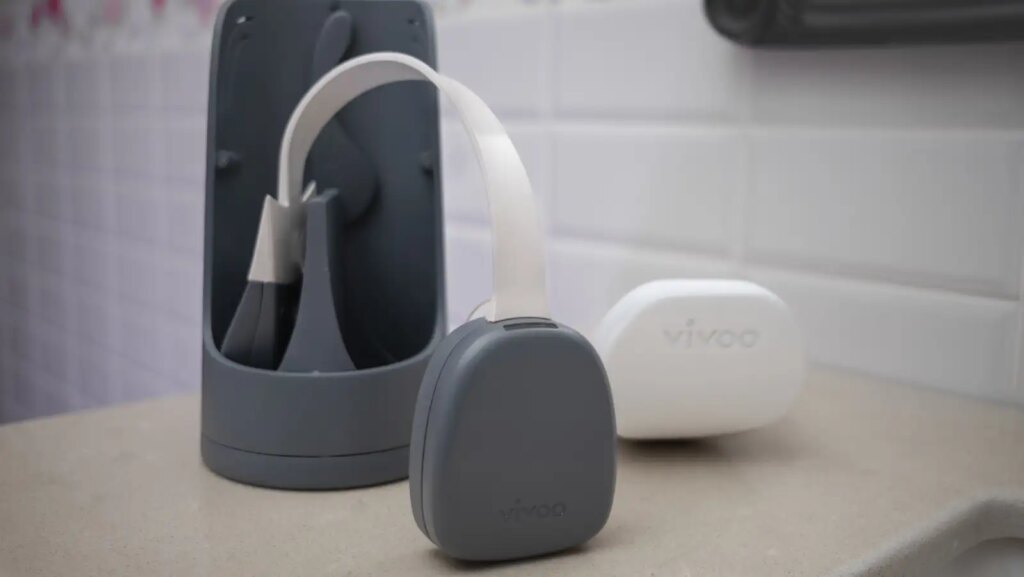
Till now, you have seen smartwatches and fitness bands monitoring your health. But technology has now taken another big leap. Now, your toilet can also monitor your health. New smart toilet technology unveiled at CES 2026 shows that in the future, bathrooms will not just be places to clean, but also points for daily health check-ups. American health-tech company Vivo was the most discussed in this trend. Do not confuse it with smartphone maker Vivo, because Vivoo is a separate American company.
The company, Vivoo, introduced the Vivoo Smart Toilet Sensor at CES. This isn’t an entirely new toilet, but rather a small device that can be clipped to the rim of any standard toilet. Every time the user uses the toilet, this sensor automatically scans the urine sample. Optical sensors inside it read the density and color of urine, which shows whether the body is properly hydrated or not.
This sensor connects to the mobile app through Bluetooth. After every flush, a hydration report appears on the app. It also shows daily, weekly and monthly trends, showing when the body was dehydrated and when hydration levels were at the right level. According to the company, this device is specially designed for fitness lovers, elderly and those users who need to constantly monitor their kidney or urinary health. Its price is around 100 US dollars, which is approximately 8-9 thousand Indian rupees. The basic app is free, while a subscription model will be available later for advanced trend analysis.
At CES, some other companies showed off more advanced technology. These complete smart toilet systems can detect health patterns not only from hydration levels but also from urine and stool samples. This may indicate early signs of kidney problems, infection or digestive problems. In simple words, data coming from the bathroom can now tell what is happening inside the body. Now a new question is also arising. Smartwatches, smart speakers and health apps are already collecting our personal data, so health data generated from smart toilets will also raise privacy concerns. The companies claim that the data will be encrypted and will not be shared without the user’s permission. However, experts believe that health data is one of the most sensitive types of information, so both trust and regulations will be important.
For now, one thing is for sure: technology has now reached the most private parts of our bodies. In the future, the first health check-up before going to the doctor can happen in your own bathroom. And this change could be as important for the world of healthcare as the arrival of smartwatches. It will be interesting to see how it turns out.