
You type a question on your phone, and the AI answers. Everything seems light and digital, but the machines behind this answer consume a lot of electricity. Now the situation has become such that AI is no longer just a technology; It is becoming like a separate country in terms of electricity consumption. Recent international reports suggest that in the next few years, AI and its associated data centers will use more electricity than many entire countries today. According to the International Energy Agency (IEA), by 2030, the total electricity consumption of the world’s data centers could reach approximately 945 terawatt-hours. The biggest reason for this increase is Artificial Intelligence (AI). Let’s understand this figure on a country scale.
These statistics related to AI are shocking!
Countries like Norway use about 130-140 terawatt-hours of electricity annually. Finland uses about 85 TWh, Greece about 55 TWh, Portugal about 50 TWh, and New Zealand about 45 TWh. This means that the total electricity used by the entire population, industry and transportation of these countries is not equal to what a single AI system could use in the future. To put it simply, if AI is considered a country, it will surpass many real countries in terms of power consumption.
Data center and power consumption…
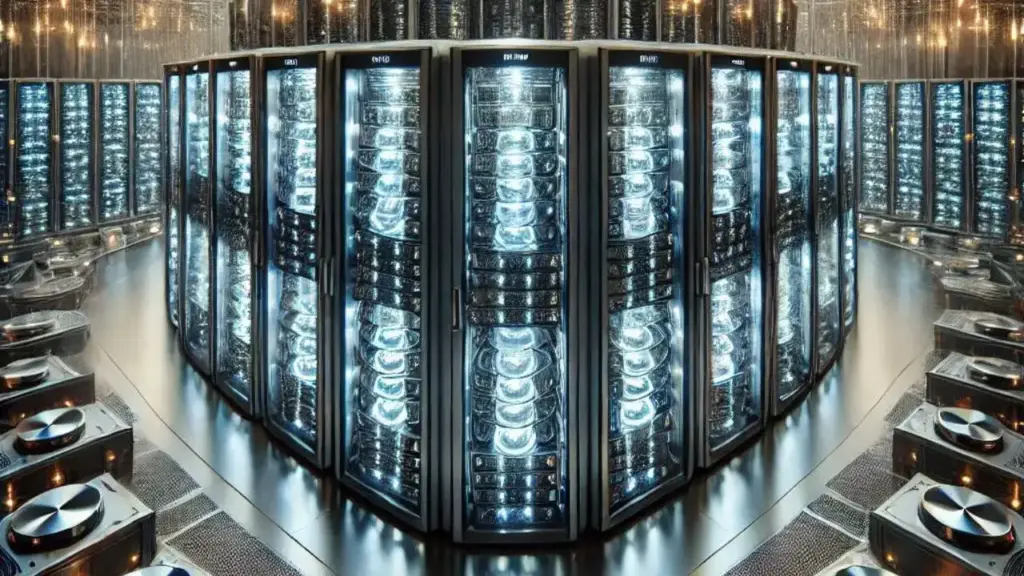
It is important to understand the reason behind this. AI doesn’t work in thin air. It relies on huge data centers with millions of servers that run 24/7. These servers are activated every time a user asks ChatGPT a question, creates an image, or uses any of the AI tools. The harder these servers work, the faster they heat up, and they require a lot of power to keep them cool. This is the reason why with the increasing use of AI, the demand for electricity is also increasing rapidly. The IEA says that between 2024 and 2030, electricity consumption by data centers could grow by about 15 percent annually. This growth rate is considered much faster than any other sector. The interesting thing is that data centers are not just for the Internet or the cloud. A large part of these are now being used specifically to run AI models. Research shows that AI servers alone currently account for a large portion of the total power consumption of data centers, and this portion is expected to grow fastest in the coming years.
Old power plants are being restarted…
Its impact is already visible on the ground in America and Europe. According to reports, power companies in many places are having to restart old power plants because the demand from new AI data centers has suddenly increased. In some states, there has been so much pressure on the grid that it is becoming difficult to provide connections to new factories and housing projects.
This means that AI is not only changing the digital world, but also impacting real-world power systems. Although many companies are working on efficient data centers, there is still a lot of work to be done in this area. Experts believe this question will become even more important in the future: Where will all this electricity come from? If this electricity is generated from coal or gas, carbon emissions will increase. And if it is built with renewable energy, it will require a lot of investment and infrastructure. Therefore, now many countries are considering AI not just as a technology issue but also as a part of their energy policy.
The interesting thing is that the common user is completely unaware of this entire situation. Asking a simple question, drawing an image, or writing a paragraph—it all feels free and easy. But in the backend, the same question is making the electricity meter spin faster. This is why experts are now saying that making AI energy-efficient will be as important in the future as making it smart.
Today, AI is being called the power of the future, but the truth is that it is also demanding the electricity of the future. And if this pace continues, the question in the coming years will not be what AI can do, but whether the world will be able to generate enough electricity for it.