
Washington, January 28 (IANS). US President Donald Trump has said that his administration will find ‘some’ solution to the tariff issue with South Korea. Earlier this week, Trump had threatened to increase ‘reciprocal tariffs’ and other duties on Asian ally South Korea.
Trump’s statement has increased expectations of talks between Seoul and Washington. Trade tension is again being seen between the two countries. Meanwhile, South Korea’s Industry Minister Kim Jung-kwan is expected to visit the US, where he will hold talks with US Commerce Secretary Howard Latnick. This information has been given by Yonhap News Agency.
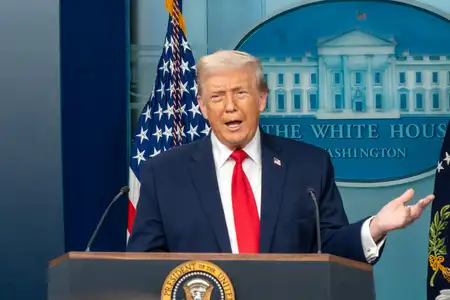
“We will find some resolution with South Korea,” Trump said during a call with reporters at the White House. He said this in response to a question in which he was asked whether he would increase tariffs on Korea.
On Monday, Trump suddenly announced that he could increase ‘reciprocal’ tariffs on South Korea as well as tariffs on cars, lumber and medicines from 15 percent to 25 percent. Trump had blamed this on Seoul’s delay in implementing laws related to the trade agreement.
On Tuesday, a White House official told Yonhap News Agency that South Korea has made “no progress” in meeting its responsibilities in the bilateral trade agreement. Whereas America had reduced tariffs under the agreement.
Under the agreement, signed in late July and finalized a few months later, South Korea promised to invest $350 billion in the United States. In return, America reduced the ‘reciprocal’ tariff from 25 percent to 15 percent.
Trump’s new threat to increase tariffs comes at a time when America is concerned about the ongoing investigations in South Korea. This includes an investigation into a major customer data leak against US-listed Coupang Inc and steps to control online platform companies.
Apart from this, the weakness of the South Korean currency Won against the US dollar also remains a matter of concern. Due to this, there is a fear that South Korea may face difficulty in fulfilling the investment promises made under the trade agreement with the US.
–IANS
DBP/AS