
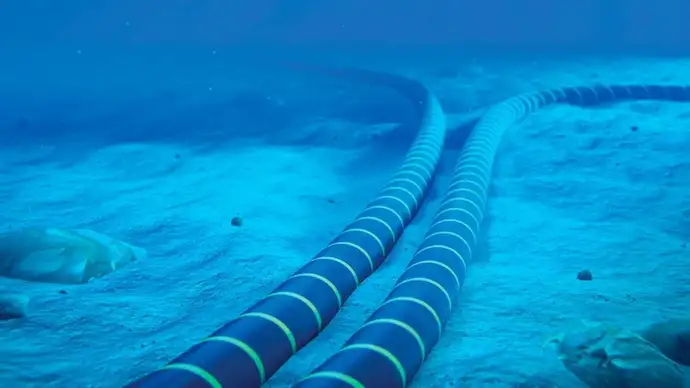
Tension between America, Israel and Iran is continuously increasing in the Middle East. The impact of this situation is no longer limited to just the land or air; This danger has now reached the depths of the sea as well. In fact, undersea fiber-optic cables—which carry much of the world’s Internet traffic—have emerged as a new cause of concern amid rising tensions.
cables passing through sensitive areas
According to the International Telecommunication Union (ITU), about 99 percent of the world’s Internet traffic travels from one place to another through these cables laid on the bottom of the sea. These cables pass through sensitive areas such as the Strait of Hormuz and the Red Sea—areas where the current geopolitical situation appears to be rapidly deteriorating.
Threat to critical infrastructure
Although Iran itself has not made any direct threats regarding these cables, Iran-backed Houthi rebels have warned several times of their intention to cut these cables in the Red Sea. As a result, this critical infrastructure now faces a major threat.
A big warning for India
The situation may prove even more worrisome for India, as about 60 percent of the country’s Internet traffic depends on a particular sea route connecting Mumbai to Europe—a route that passes through this tense region. The remaining traffic travels via Chennai to Singapore and then across the Pacific Ocean. This means that a large portion of India’s internet connectivity is currently vulnerable to serious geopolitical risks.
17 sea cables pass through the Red Sea
According to reports, about 17 sea cables pass through the Red Sea. The special thing is that these cables contain fiber-optic core, copper wires and protective layers, with the help of which huge amounts of data are exchanged every second.
Is the Internet going to slow down?
However, if for some reason these cables break, the Internet will not be completely shut down, as the network is connected through many different paths; However, diverting traffic can increase the load on the network, potentially slowing down Internet speeds.