
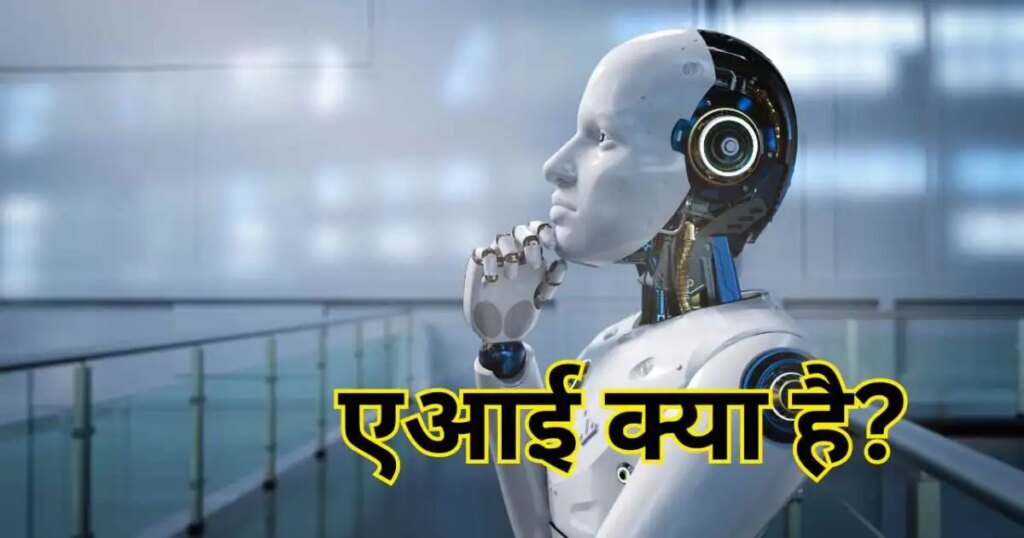
AI has now become a part of our everyday life. From social media feeds to phone photo galleries, and from hospital machines to chatbots, AI is everywhere. But with its increasing use, people’s concerns are also increasing.
What is AI and how is it used?
AI is a type of computer system that rapidly processes large amounts of data, recognizes patterns, and makes decisions based on them. It cannot think or feel like humans, but can perform tasks that normally require the human brain.
How does Generative AI work?
Tools like ChatGPT, Gemini, Meta AI, and DeepSeek are based on generative AI. This technology can learn from the vast amount of text, photos and videos available on the Internet, creating new answers, new images, new code and even songs. Apps like Midjourney or Veo can convert text to photos or videos. However, they sometimes make mistakes, such as incorrect facts, incorrect sources, or strange images.
Why is there controversy and fear about AI?
The rapidly increasing power of AI has raised many concerns among experts.
impact on jobs
The IMF has warned that AI could impact 40% of jobs worldwide, threatening to increase economic inequality.
discrimination and misinformation
AI only learns what is present on the Internet, and that includes discriminatory or inaccurate content on the Internet. Therefore, AI may sometimes show racism, gender discrimination, or make false claims.
Creators’ rights
Thousands of artists, writers and musicians allege AI companies use their content to train their models without permission.
Impact of AI on the environment
Data centers running large AI models use a lot of electricity, water, and resources. According to some research, the AI industry could soon use as much energy as the entire Netherlands. This may also increase water shortage in many countries.
Are AI laws being made?
Many countries have taken steps to regulate AI. The EU passes the AI Act, which imposes strict rules on high-risk AI systems. China has created transparency and data security rules for generative AI. UK and US are conducting joint trials on AI safety. Many countries have initiated action against deepfakes and AI-based sexual crimes.
AI and the environment – a hidden threat
As smart as AI is, it is also energy-intensive. Training AI models requires a lot of electricity, a lot of water and a large server infrastructure. Some reports claim that the AI industry could soon use as much electricity as an entire developed country. Data centers also use millions of liters of water for cooling, which can further increase water shortage in many countries.
What will AI be like in the future?
In the future, AI will become such an essential part of human life that it will become almost impossible to separate it from it. In the future, this technology will not just be a machine that answers questions, but will develop with the ability to think, understand and take decisions like humans. Conversations and interactions will become so natural that sometimes it will be difficult to recognize whether a human or a machine is speaking.
The scope of technology will expand even further from now on. Today AI is limited only to phones, laptops and internet services, but in future it will be found working silently everywhere in our homes, offices, schools and hospitals. Such robots will be created which will not only obey commands but will also guess your needs and complete the tasks automatically. Household chores, caring for the elderly, operating industrial machinery, or providing immediate assistance in emergencies will become everyday tasks.
Healthcare will also help
AI will play an important role in healthcare. Machines will prove to be faster and more accurate than humans in detecting diseases. Cancer, heart disease, or other serious problems will be detected in their early stages, and individual treatment plans will be tailored for each patient. This change can completely change the healthcare system.
ways of working will change
The world of work and employment will also change. AI will automatically handle many repetitive tasks, but it will also create new jobs and new industries. Human creativity and AI’s fast processing will combine to create careers that are difficult to even imagine today.
However, this good future also has some risks. The more powerful AI is, the greater the risk of its misuse. Deepfakes, data theft, AI-based cyber attacks, surveillance and privacy concerns—all these challenges will force the world to create strict rules to guide the technology.