New Delhi, April 23 (IANS). Nowadays, it has become almost impossible to lose your way. Just turn on a smartphone or car navigation system and the exact location is revealed. This is possible with the help of Global Positioning System i.e. GPS, which is a modern technology based on the network of satellites present in space.
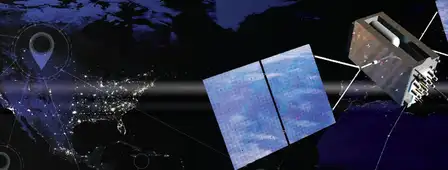
GPS tells us our exact location anywhere on the earth but the question is what is GPS and how does it give such accurate information. GPS is actually a network of more than 30 navigation satellites, which continuously rotate in a very high orbit around the Earth. These satellites keep sending special signals all the time. The GPS receiver in your phone, watch or car picks up these signals and calculates exactly where you are.
This system consists of three main parts, satellite, ground station and receiver. Satellites rotate about 20 thousand kilometers above the earth in a 12-hour cycle. Their arrangement is such that almost always 6 or more satellites are visible from any place on Earth. Ground stations are stations built on Earth that keep checking the position of these satellites and keep them on the right path when needed. At the same time, the receiver is the most important part, which we use every day. When the receiver receives signals from at least four satellites, it calculates its distance to each satellite. Based on these distances, the receiver finds your exact location with the help of trigonometry i.e. trilateration.
Common receivers give an accuracy of a few meters, while high receivers can give the exact location up to a distance of a few inches. In ancient times, sailors used to find direction by looking at the stars. Today satellites do the same work very quickly and accurately. GPS is not limited to just showing the way. It is used in monitoring planes, ships, army, farmers, delivery services and even natural disasters like earthquakes.
GPS is a system developed by the US Defense Department team, but now satellites of many countries are working as Global Navigation Satellite System (GNSS). Russia’s GLONASS is also a part of this, which has 24 satellites. These satellites send codes on special radio frequencies, which the receiver decodes and uses. Hundreds of permanent receivers are installed around the world, which help scientists study the movement of the Earth’s plates, earthquakes and the direction of the Earth’s rotation.
–IANS
mt/pm