
We use the Internet every day—for everything from watching videos to sending messages. But have you ever wondered how the Internet was actually created? Simply put, the Internet is a vast, interconnected network of millions—if not billions—of computers, servers, and networks spread across the globe. When you open a website, your device requests data from that website’s server, and within a few seconds, the information appears on your screen.
Internet lifelines are under the sea
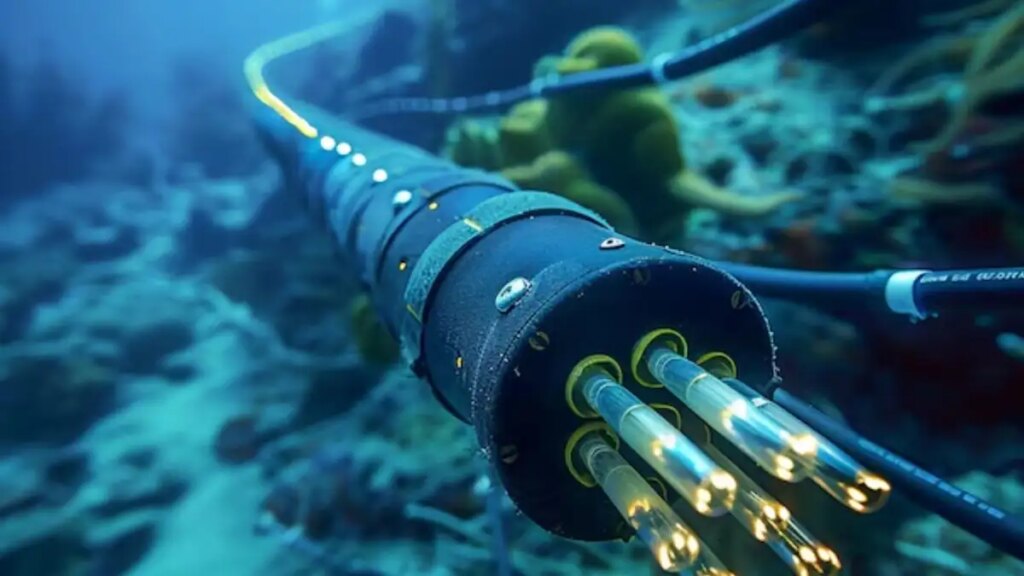
Many people believe that the Internet runs through satellite; However, the truth is that most of the world’s Internet data travels through undersea fiber-optic cables. These cables are called submarine cables, and they are thousands of kilometers long. These are the same cables that connect one country to another, making the worldwide Internet network possible.
What are fiber-optic cables?
Fiber-optic cables are made of very thin fibers of glass or plastic, through which data is sent in the form of light. When you send a photo, video, or message, it is converted from an electrical signal to a light signal and travels through these cables. This is the reason why the Internet runs at such a high speed.
How does data travel from one country to another?
Imagine that you are sitting in India and you have decided to open a website hosted in the US. Your data first travels from your mobile device or computer to your Internet Service Provider (ISP). From there, the data travels across international networks, through undersea cables, and reaches servers thousands of kilometers away in another country. That server then sends you a response, which travels the exact same path back to your device.
Does satellite have no role?
Satellites are certainly used for Internet connectivity, but they are primarily used in remote areas where ground cables are difficult or impossible to lay. However, for fast and stable Internet service, fiber-optic cables are still the most reliable medium. The vast network behind the internet
The Internet is not just one thing, but a combination of many different technologies and networks. Data centers, servers, routers, and cables—all of these work together to run the Internet. Big tech companies and telecom operators work together to maintain this network to ensure that people around the world can access the Internet without interruption.
The Internet is not magic, rather it is the result of extremely advanced technology. From the cables lying on the ocean floor to the smartphone in your hand—everything is interconnected. The next time you go online, consider that your data travels thousands of kilometers to reach you—and this is where the real power of the Internet lies.