
New Delhi, March 13 (IANS). Thousands of satellites are working in space, but like every machine, they also do not run forever. Satellites used for weather monitoring, greenhouse gas measurements or studying distant stars eventually age and wear out. In such a situation the question arises, what happens to the old satellite? Do they continue to roam in space or do they have an end?
In most cases two main methods are used, which depend on the altitude of the satellite. The first method is for low altitude orbits i.e. Low Earth Orbit. In this, engineers use the little fuel left in the satellite to slow down its speed. Due to this the satellite comes down from its orbit and enters the Earth’s atmosphere. The friction of the air falling at very high speed generates so much heat that the satellite completely burns up. This is an easy and safe method for small satellites, no debris reaches the ground. But large satellites, space stations or other large vehicles do not burn completely. In such a situation, they are dropped in a controlled manner so that the debris falls at a safe place.
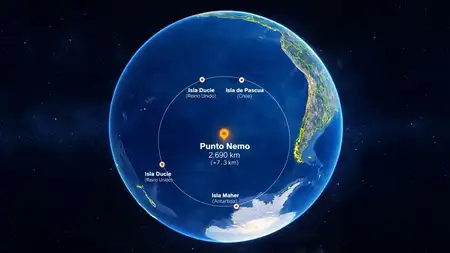
For this, a special area is chosen in the Pacific Ocean, which is called ‘Spacecraft Graveyard’ or ‘Spacecraft Graveyard’. This place is around Point Nemo, the most remote sea area on Earth. The distance from here to land is more than 2,600 kilometers. Due to being thousands of kilometers away from New Zealand, ships come very rarely, so there is no danger. Mir space station, several Salyut stations and other large vehicles have been dropped at this place.
Whereas, the second method is for higher orbits like geostationary orbit. Here a lot of fuel is required to bring the satellite back to Earth. So engineers send them further away, into ‘graveyard orbit’ or ‘cemetery orbit’. This orbit is 200-300 kilometers or more above the normal geostationary orbit, at an altitude of more than 36 thousand kilometers. Here satellites remain safe, the risk of collision with active satellites is less. These satellites can continue to roam there for thousands of years.
The question is also why is it necessary to remove old satellites? According to the US space agency, there are many active satellites in Earth’s orbit today, as well as millions of pieces of junk or space debris. These fragments can hit working satellites or spacecraft. One collision creates more fragments, which create more collisions. This chain reaction is called ‘Kessler syndrome’ or ‘Kessler effect’. If this starts, some orbits will become unusable, communications, GPS, weather forecasting will all be affected.
–IANS
MT/AS