
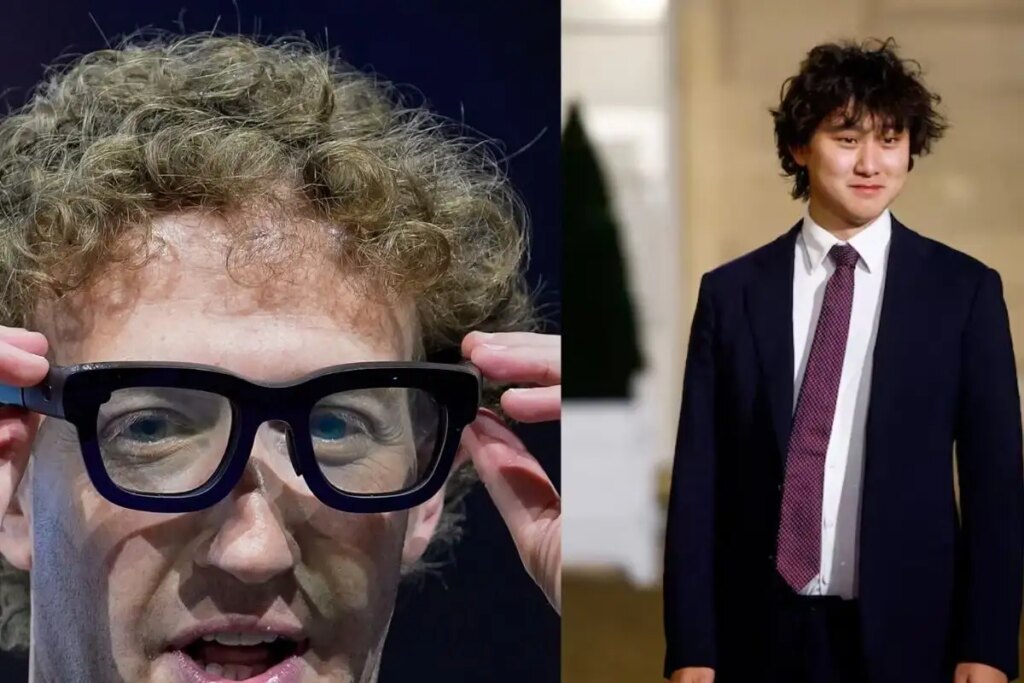
An important question is circulating in the corridors of Silicon Valley: Has an internal war over AI started inside Meta? The reason for this is the increasing conflict between the company’s CEO Mark Zuckerberg and the recently appointed star AI Chief Alexander Wang. On the surface it may seem like just a management restructuring, but the inside story raises serious questions about both Meta’s AI future and its corporate culture.
Alexander Wang, 28 years old, got ₹1.26 lakh crore!
Last year, Mark Zuckerberg made a big bet on Artificial Intelligence. He appointed 28-year-old Alexander Wang to head Meta’s new Superintelligence Labs, for which Meta invested about $14 billion, or about ₹1.26 lakh crore, in Wang’s company, Scale AI. This development caused a stir in the tech industry. This investment by Meta was one of the largest deals in modern AI history. Wang became Meta’s highest-paid employee in 2025 and was considered the company’s AI leader. But now, that same big investment, which was initially seen as a way to accelerate Meta’s AI progress, now appears to be causing conflict within the company.
Why is Wang unhappy with Mark Zuckerberg?
According to reports, Wang himself is unhappy with Zuckerberg’s methods, claiming that he is hindering his work. Many senior employees and insiders have also raised concerns that Wang is too young and inexperienced to lead the AI division of a company like Meta. It is worth noting that Alexander Wang is not an ordinary tech executive. At a very young age, he created Scale AI, which is now considered one of the largest data labeling companies in the world. Last year, Meta made him the face of its AI mission with a huge compensation package. The company’s goal was clear: to make Meta the leader in AI again, competing with OpenAI, Google, and Microsoft. But now, reports suggest that the internal situation is not so good.
Meta changes reporting structure
Meta recently implemented a new reporting structure, which replaced direct reporting lines for many teams. This change shows that Alexander Wang is not getting complete operational freedom regarding Zuckerberg’s AI vision. On the other hand, Zuckerberg himself is micro-managing the AI product roadmap. This conflict is now clearly visible. In the tech industry, this isn’t just considered a clash of egos; This is a conflict between two different thoughts. On one side is Zuckerberg’s product-first and fast shipping model, and on the other side is Wang’s approach focused on research-first and foundation model. This is why many AI researchers within Meta are now feeling uncertain about the company’s direction.
Departure of top AI talent from Meta
Meanwhile, news of some of Meta’s top AI talents leaving the company is also making headlines. According to insiders, many senior engineers and researchers are feeling uncertain about their roles and priorities. In the tech industry, this phase is called a “clutter crunch,” when a gap begins to form between lofty growth ambitions and the reality on the ground. This is an important time for the meta. The company has already invested heavily in the metaverse, which has not yielded expected returns. Now, AI is the new big bet on which future growth depends. In such a situation, internal conflicts within AI leadership are a matter of concern for both investors and employees.
Interestingly, Zuckerberg himself has declared Meta to be an “AI-first” company in recent months. From open-sourcing the Llama model to in-house foundation model roadmaps, AI is becoming a core part of company identity. However, if there is a lack of clarity and coordination within the AI team, then like the metaverse, it too can be in danger.
Founders don’t want to give up control
This is a well-known situation in Silicon Valley. The tension between a visionary founder and a high-profile expert hire becomes almost certain after a certain point. History has seen many such conflicts, which can be called conflict in simple words. This often happens when company founders are unwilling to give up control, while expert leaders like Alexander Wang want more freedom. The meta now seems to be at a similar juncture. At present, the company is not officially acknowledging any internal conflicts publicly.