
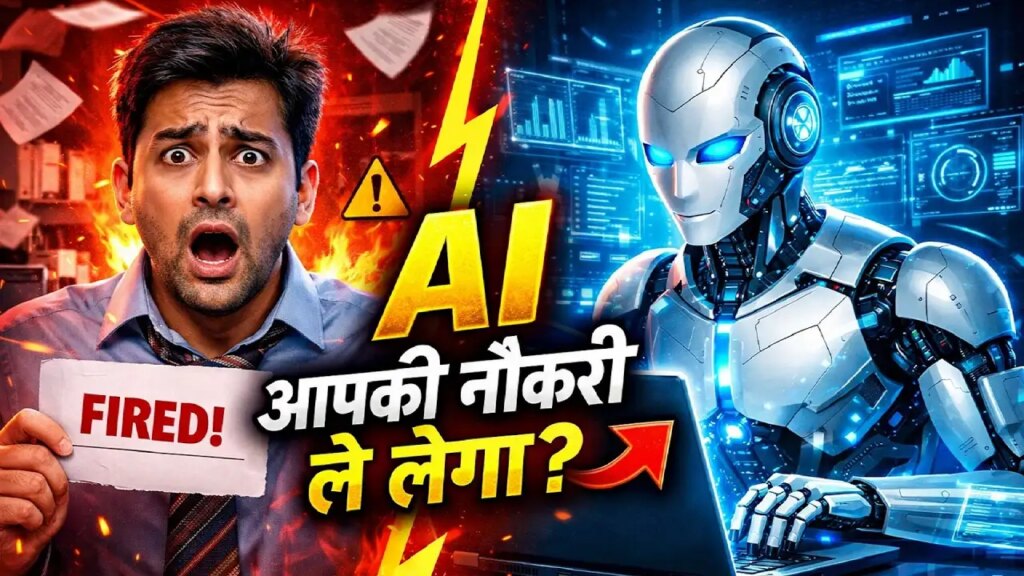
In today’s era, Artificial Intelligence (AI) is spreading rapidly in all sectors. With this expansion, a big question arises in people’s minds: Will AI eliminate our jobs? Many experts have warned about this, but a recent report from Bank of America suggests looking at this threat from a slightly different perspective.
What does the report say?
According to the bank’s research, AI is undoubtedly going to change the job market in the future; However, this does not mean that jobs will disappear completely. Data from the last 85 years shows that whenever a new technology comes along, the *way* we work changes, but the jobs themselves don’t change. On the contrary: new professional roles have emerged over time.
Jobs changing over time
The report emphasizes that many of the jobs that exist today did not exist in the past – about 60% of today’s jobs did not exist in 1940. Roles like data scientist, social media manager and cloud developer have emerged only in the last two decades. Moreover, whereas earlier a large section of the population was dependent on farming, today this number has reduced significantly. This shows that technology is changing, but it is also creating new opportunities.
How big is the threat of AI?
The report also suggests that around 840 million jobs worldwide could be affected by AI. About 33% of jobs fall into the category where AI can have a significant impact. In about 13% of tasks, AI is expected to work as an assistant, working closely with humans. There are only 2.3% of jobs that can be completely taken over by AI. This suggests that, although the threat of job loss has not completely disappeared, it is not as great as is often reported.
AI: not just an enemy, but a partner
It would be wrong to see AI only as a technology that takes away jobs. In many cases, it serves to make human work easier and faster. As the adoption of AI increases, the need for people to learn new skills will also increase. Those who will adapt themselves with time and keep updating their skills, their opportunities will increase. Instead of fearing AI, it is more important to understand it. This technology is certainly changing the job market, but history shows that with every change comes new opportunities.