
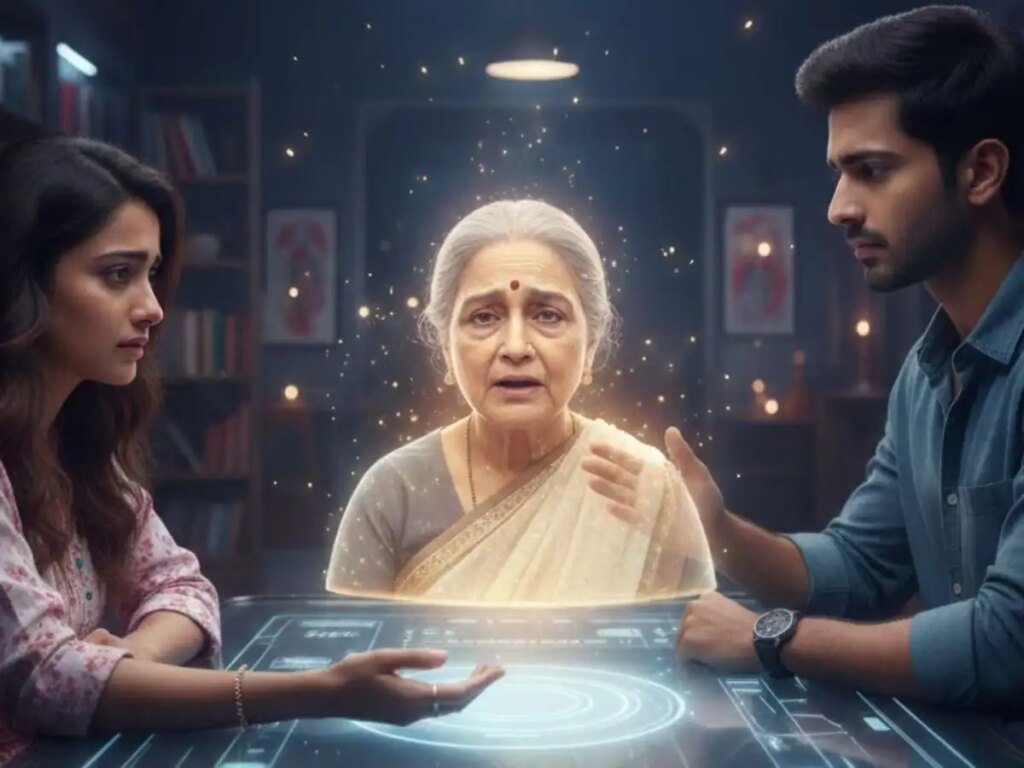
A small scene from the web series Mismatched 2 is no longer just a matter of imagination in today’s world. In that scene, characters played by Prajakta Koli and Rohit Saraf show off an AI app that can speak in the voice of a dead person and send messages. As the story progresses, the question deepens: If technology allows us to talk to the dead, where will the line be drawn between memories and emotional closure?
Technology is turning fiction into reality
While the series portrays this as an emotional dilemma, the real world is quickly moving in that direction. Tech companies are now working on such tools that can give the experience of talking to a person even after his death. Hearing a familiar voice, getting advice, or having a conversation—all of this is going to become a reality by 2026.
What is Digital Afterlife and Grief Tech?
According to a report by The Conversation, AI is now making the concept of a digital afterlife possible. This is often called grief tech. This includes AI-powered digital twins or deathbots that are trained on a person’s voice notes, videos, photos, messages and memories. The result is a chatbot or avatar that mimics the mannerisms, personality, and body language of that person, as if that person has become digitally immortal.
Emotional comfort or new difficulties?
The appeal of this technology is easy to understand. For families who have lost a loved one, it can provide a sense of comfort and connection. However, it also raises many legal and ethical questions, such as consent, ownership of data, and misuse.
Who owns identity after death?
The biggest question is whether a person’s identity remains his even after death. In many countries, including Australia and India, the law does not yet clearly determine whether voice, face or personality are property. Copyright protects works such as books or films, but not a person’s presence, voice or body language. So, if AI responds using data about a person’s life, who owns that data—the family, the individual, or the company?
What is the situation in India?
Some initial steps have been taken in this direction in India. In recent years, many celebrities have approached the courts under personality rights grounds to protect their identities from being used without permission. Celebrities like Karan Johar, Aishwarya Rai Bachchan, Abhishek Bachchan, Anil Kapoor, Jackie Shroff, Sadhguru and Arijit Singh are examples of this. However, such legal protection is not yet clearly available to ordinary citizens.
Risk of defamation and liability
Another concern is that AI may change over time. If in the future a digital twin starts expressing thoughts that the real person never had, or if his or her behavior goes wrong, who will be responsible – family, the platform, or the developers? There is no clear answer to this.
impact on mental health
Psychologists believe that constantly interacting with AI versions of deceased loved ones could increase rather than reduce grief. This can lead to emotional dependency and make it difficult to recover from the grief. Additionally, when users entrust their personal memories and data to such platforms, it is not clear what will happen to that digital avatar if the company closes down or is sold.
How safe is trust without laws?
As the idea of a digital afterlife becomes more common, the lack of strong regulations is increasing the risks. Experts say that unless governments make clear and strict laws, handing over your voice, memories and identity to private companies can be a risky decision. Grief Tech may offer some solace, but comfort and control don’t always go hand in hand.