
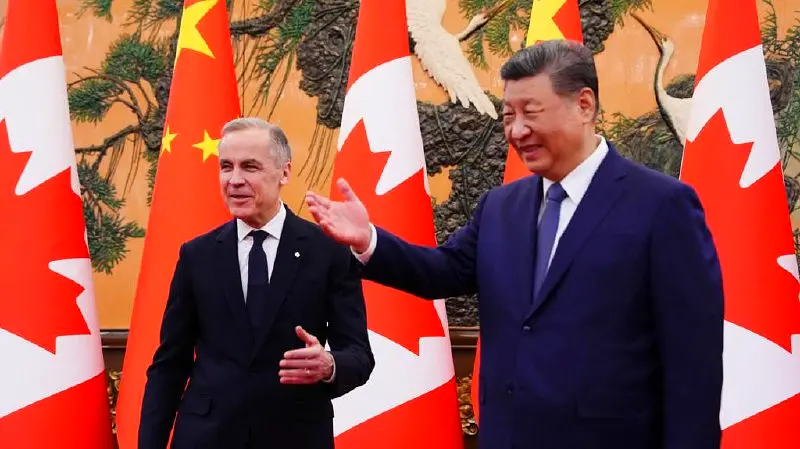
A historic trade agreement has been signed between Canada and China, which has taken a major step towards reducing the ongoing tension between the two countries. Prime Minister Mark Carney has announced after talks in Beijing that Canada will reduce the hefty tariffs imposed on Chinese electric vehicles (EVs). In exchange for this decision, China has agreed to reduce and eliminate its retaliatory tariffs on Canadian agricultural products, particularly canola and seafood.
Big discounts on Chinese electric vehicles
Under this new agreement, Canada has significantly relaxed the import rules for Chinese electric vehicles. Now the 100 percent tariff on Chinese cars will be reduced to just 6.1 percent. This exemption will be applicable to 49,000 Chinese electric vehicles annually. The government believes that this step will make electric vehicles cheaper in the Canadian market. It is estimated that by 2030, half of these imported vehicles will be priced below $35,000, making it easier for ordinary people to purchase an EV.
Canadian farmers and seafood industry benefit
In response to this move by Canada, China has given major relief to Canadian agricultural exporters. According to the agreement, China will reduce its restrictions on Canadian canola seeds and other products. This is a big victory for Canadian farmers, who have been facing China’s sanctions for quite some time. The table below details the major changes:
Product Changes Timing of Effectiveness Canola seed duty will be reduced from 84% to 15% from March 1 Canola meal, lobster, crab and pea ‘anti-discriminatory’ tariffs will be completely removed from March to the end of the year
Different path from America and new partnership with China
Prime Minister Mark Carney has described the agreement as part of a “comprehensive strategic partnership” with China. He said it reflected a “realistic, respectful and interests-based” engagement. The agreement marks a significant change in Canada’s foreign policy, as it departs from the US’s tough policy towards China. Ottawa is now trying to reset relations with China, giving priority to its economic interests rather than following Washington’s path.
End of old trade dispute
This agreement has been possible after PM Carney’s meeting with President Xi Jinping, which has brought an end to the trade dispute that has been going on for many years. The previous Liberal government imposed 100 per cent tariffs on Chinese EVs in late 2024 to protect Canada’s auto sector. In response, China imposed retaliatory tariffs on Canadian agricultural products in March 2025. The current agreement ends this “tit-for-tat” fight.
Opposition raised questions
Although this deal is being welcomed, its criticism has also started in domestic politics. Conservative leader Pierre Poilievre has criticized the agreement and raised the question whether this reduction in tariffs is permanent? He also pointed to Prime Minister Carney’s past statements, in which Carney once described China as Canada’s “biggest security threat.” The opposition says that there is a difference between the words and actions of the government and this could compromise security.
Last Updated: 17 January 2026