
In Nepal, the youth of 20 to 25 years have changed power by using social media forums, after that, will it be discussed or demolished in the coming years?
In Nepal, there was deep dissatisfaction among the people about the policies of the government and the political aristocracy. Social media continuously edited that dissatisfaction. The special thing is that despite the social media ban and ban on the Internet, more than half of Nepal’s population was online. For this, the protesters enlisted the help of Virtual Private Network i.e. VPN. In addition, Nepal’s Jane ji also used a unique use of discords, which is the virtual community hub of gamers. Many tasks were done from organizing demonstrations through this platform to choosing the interim Prime Minister. The discord had never been used before.
This strength of social media is not new. Between 2009–2011, ‘Arab Spring’ showed how social media can become a weapon of political change. In countries such as Tunisia, Egypt, Libya, Bahrain and Syria, youth and activists used Facebook, Twitter and YouTube as a platform for the movement. In Tunisia, the news of Mohammad Buajiji’s self -immolation was first spread through video and photo on Facebook and YouTube. On seeing this anger turned into a digital wave. The Facebook page “WeR All Khalid Said” (all of us Khalid Said) became the most famous in Egypt, which was created by a young worker. This page became the center of police excesses and corruption stories. Through this, thousands of people gathered at Tahrir Chowk in Cairo. Hashtags like ‘January 25’ and ‘Arabspring’ started running on Twitter, which caught the attention of international media. Protests uploaded on YouTube and video of police Daman created sympathy and pressure all over the world. In these countries, the traditional media was under the control of the government, so social media became the place where people could open their point openly. This was the first major example when online pages, viral videos and hashtags organized millions of people on real roads for agitation.
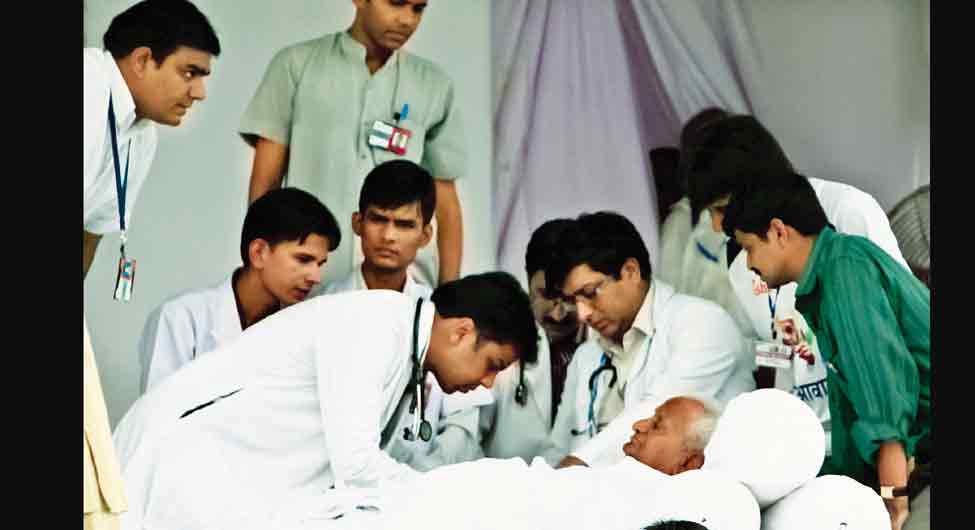
After the Arab revolution, the youth of the world understood that all the forums of social media are far ahead of entertainment. During 2011, the movement of the Commonwealth scam started in India, while some youths run a campaign on social media ‘Commonwealth.’ He was well liked. After that, the India Angestcharpan page was launched on the advice of Arvind Kejriwal, with about three lakh members in the first two to three days. At the ground level, the movement started gaining momentum, then its effect started showing in the cyber world too. When thousands of pages were made on Facebook, the hashtag ‘Anna Hazare’ and ‘India Against Corruption’ started trending in the country and abroad on Twitter. This led to international attention to the movement. The youth shared speeches and videos on YouTube, causing the movement to spread across the country. Photos and live updates of Anna’s performance continued shares. At that time, a crowd was gathered through the mobile SMS campaign and the information about the date, place and time was constantly sent to the people on SMS. Students of IT sector and colleges were especially active online, so they made posters, slogans and mim “” viral “on social media.
After the Anna movement, during the 2012 Nirbhaya incident, social media played a big role in organizing public outrage in the country, especially the capital Delhi and bringing the voice to the national and international level. On Facebook, pages like “Justice for Nirbhaya”, “Delhi for Women Safety”, “Stop Rape Now”, thousands of people joined and continued to share information about updates, photos, slogans and protests. Similarly, Nirbhaya, Delhi gang rape, Justice for hashtag started getting trend on Twitter. Petitions started on sites such as Changdotoraji and Awaaz, which were signed millions and united people on social media themselves worked as a pressure group.
Actually, the Anna movement in India proved to be a turning point in the context of the use of social media. The role of social media in making this movement successful changed people’s opinion. These forums also got a tremendous place in the mainstream media. However, even during the 26/11 attacks in Mumbai, the strength of social media was realized to the people of the country, but its center was Mumbai and its effect was for a few days.
After the Anna movement, the changes in the behavior of people associated with social media, especially the youth, showed that these platforms are not just a medium of entertainment. The work of directly challenging the companies regarding the complaint of consumer affairs, from the ears of the concerned departments over constitutional rights, started from these forums. Many projects ‘crowdfunding’ took place through social media.
The biggest strength of social media is ‘sharing and likes’. That is, written on mobile in a moment-share it into your group. It is easy to speak in less words on social media forums. In addition, the writing is given immediate reactions, and it doubles the enthusiasm of the people.
The youth are more aware of this power, because technically they are not only more advanced than the previous generation, but they have more understanding of every feature of mobile phones and their fingers running fast on mobile want to understand every new platform more. The vocabulary on these forums of Jane ji is also different, and only youth understand this vocabulary.
By the way, it is also true that social media strength in countries like Nepal, Bangladesh and Sri Lanka also looked more because their geographical area is not very detailed. In these countries, information spreading like wildfire on social media forums took the youth in a very short time and they could execute their goals together. Although there are about 55 crores of WhatsApp in India, about 42 crore of Facebook and more than 23 crore users of Twitter, but it is not easy to add all these people in India for one purpose simultaneously. The reason for this is many. For example, different languages, different levels of sensations, different geographical conditions and government powers. Although small campaign on social media keeps achieving limited success, the success of the major movement is possible only when an issue is equally effective on the ground.
Certainly social media has given strength to the common people, but it cannot be denied that rumors have wings through social media. There are countless examples where violence spread due to rumors spreading on social media. Viral content spreads like wildfire on social media, and this is also its strength and weakness.
On the other hand, the credibility of traditional media is only because wrong information is filtered to an extent. This is not usually in social media. This is also a strong basis for governments, through which she advocates curb on social media. Recently, the Parliamentary Communications and Information-Director Committee, headed by BJP MP Nishikant Dubey, said that some influential people and influencers in the country are working against the national interest on social media. Now what is against the national interest is a matter of very complex debate.
(The author is a former executive editor and social media knowledgeable)