
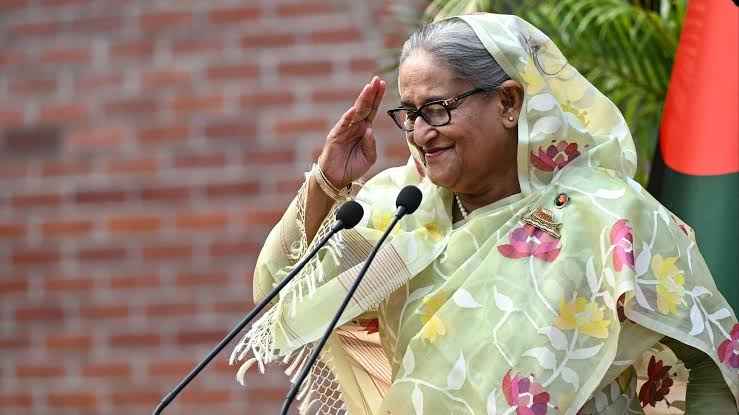
Bangladesh has tightened security ahead of the shutdown as the Bangladesh International Criminal Tribunal (ICT) prepares to deliver its verdict in a case filed against former Prime Minister Sheikh Hasina.
The case relates to alleged crimes against humanity during the student-led protests in July–August 2024. Sheikh Hasina has denied all the allegations against her.
The situation in Bangladesh has become tense before the decision. Sheikh Hasina’s Bangladesh Awami League has announced a two-day strike across the country from Sunday morning, disrupting normal life. Traffic in the capital Dhaka has been relatively light, while there have been reports of bursting of firecrackers in some areas.
Business leaders have expressed concern over the political situation and expressed hope that the upcoming general elections will help restore stability in the country.
Kazi Moniruzzaman, former president of Bangladesh Garments Manufacturers and Exporters Association (BGMEA), said, “I think this is not a very comfortable situation. We are very scared about this situation. We hope that there will be free and fair elections, people will vote peacefully, and an elected government will be able to solve all the problems – trade, social issues, law and order – which are in a very bad state at present.”
He further said, “As a freedom fighter who fought for the country in 1971, I am deeply sorry for the inconvenience caused to the people of Bangladesh. Last year was very difficult. We hope that the 2026 elections will give new hope to the people of Bangladesh. Our aim is to maintain good relations with all neighboring countries while protecting our sovereignty. Above all, we must unite for a peaceful situation in the region.”
Moniruzzaman also stressed the importance of maintaining strong ties with neighboring India and said, “India helped us in 1971 and as a freedom fighter I was trained there. We need to maintain strong ties with India while respecting our sovereignty. As a big neighbor, India will respect our sentiments and we hope that we will have good relations in the future.”
Commenting on the garment industry, Moniruzzaman said, “We are proud of the garment industry. It has been going on for a long time, but the current situation is unsustainable. Any kind of unrest will damage the industry and could lead to loss of confidence of foreign buyers. The sector earns most of Bangladesh’s foreign exchange and employs many people, especially women. If the industry is not protected, it could lead to social unrest and economic problems.”
Regarding minorities, he said, “As a human being, I do not believe in discrimination between minority or majority. We are all Bangladeshis and there should be no discrimination on the basis of religion.”
Since the interim government led by Nobel laureate Muhammad Yunus has banned the activities of the Awami League and its affiliated organisations, party leaders have been announcing programs through social media from undisclosed locations as well as actively campaigning online.
In July 2024, a student-led rebellion toppled the government of Sheikh Hasina. On August 5, 2024, she fled to India and an interim government was formed under the leadership of Muhammad Yunus. According to a UN report, around 1,400 people may have been killed in the July protests.
The Sheikh Hasina administration initially established the International Criminal Tribunal to prosecute crimes against humanity committed during Bangladesh’s 1971 liberation war against Pakistan. The tribunal had earlier tried several Jamaat-e-Islami leaders accused of war crimes during Hasina’s tenure.