
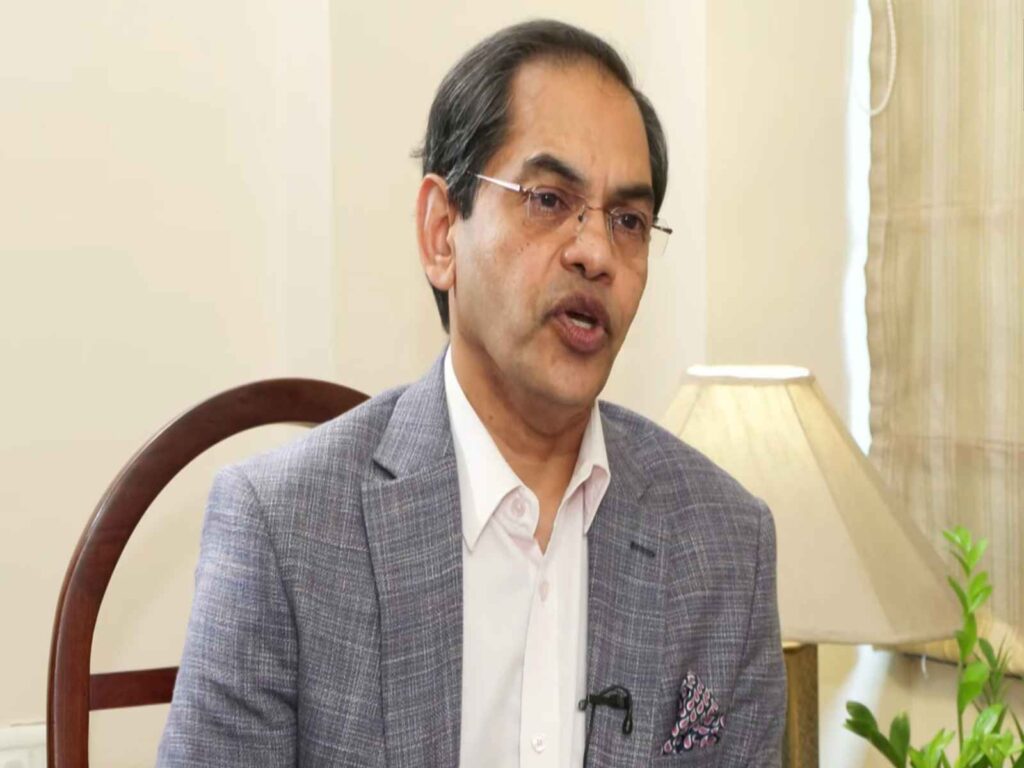
India’s former ambassador to the UAE, Sanjay Sudhir, gave a candid assessment of Islamabad’s position in West Asian diplomacy, saying Pakistan was never a “mediator” in the Iran-US conflict but was only “at best a messenger”.
Speaking to ANI, he highlighted the growing “trust deficit” and financial pressures that appear to be isolating Islamabad on the global stage.
He said that true mediation requires both the disputing parties to sit down and talk with the mediator – a situation that has never been realized for Pakistan.
He said, “I think these two things you have mentioned raise questions about Pakistan’s credibility. Because till yesterday Pakistan was trumpeting itself as a mediator. In fact, it was far from being a mediator; it was at best a messenger. Mediation is supposed to mean both sides sitting face to face – that never happened. So, as you said, Iran has exposed Pakistan’s hypocrisy.”
Despite Pakistan’s claims of playing a key role in reducing tensions, Iran has reportedly refused to meet any US-led delegation on Pakistani soil. The Wall Street Journal reported that Tehran has described the US demands as “unacceptable”, virtually eliminating the possibility of any quick resolution and marginalizing Islamabad’s diplomatic efforts.
Sudhir said Iran’s refusal to negotiate through Islamabad has exposed Pakistan’s exaggerated claims of diplomatic influence. This diplomatic setback has come at a time when Pakistan is in a very weak position economically. According to reports, UAE has requested Pakistan to pay its outstanding sovereign debts within a month.
He said, “On the issue of debt repayment, I have spent four years in the UAE, and I have seen that the UAE has always been very generous towards Pakistan in terms of debt repayment. But of course, there is a limit to this too. There is a limit, and how long can they keep postponing these dates? And there comes a time when every sovereign has to repay the debt. I think that time has come. And perhaps this will make Pakistan more sensitive to all the incidents going on there.” “Reveals something about the role.”
It is noteworthy that Pakistan has decided to return the loan of US $ 3.5 billion to the United Arab Emirates (UAE) before the end of the month, as reported by Dawn newspaper to a senior Pakistani official.
The official described the move as one to preserve “national dignity” despite the potential impact on the country’s foreign exchange reserves. “The amount will be returned as soon as possible,” the official said, adding that “national dignity cannot be compromised for financial gain.”
News reports said Abu Dhabi has demanded the immediate return of the funds, which were part of external financial assistance given in 2019 through the Abu Dhabi Development Fund to stabilize Pakistan’s balance of payments.
According to Dawn report, Pakistan is currently under a program of the International Monetary Fund which requires it to secure a rollover of about US$12.5 billion from key partners including China, Saudi Arabia and the UAE to maintain reserve levels and meet external financing requirements.
According to the latest data published by Dawn, Pakistan’s central bank’s reserves stand at about US$16.3 billion. Repayment of about US$3 billion could reduce reserves by about 18 percent, significantly weakening the country’s external security and import capacity.
Economic analysts warned that if not offset by new investment, the move could put pressure on Pakistan’s currency and complicate its status under the IMF programme. However, no alternative financing arrangements were immediately indicated.
The interplay of these two developments – diplomatic rejection by Iran and financial pressure from the UAE – is reducing Pakistan’s room for maneuver in the complex geopolitics of West Asia.