
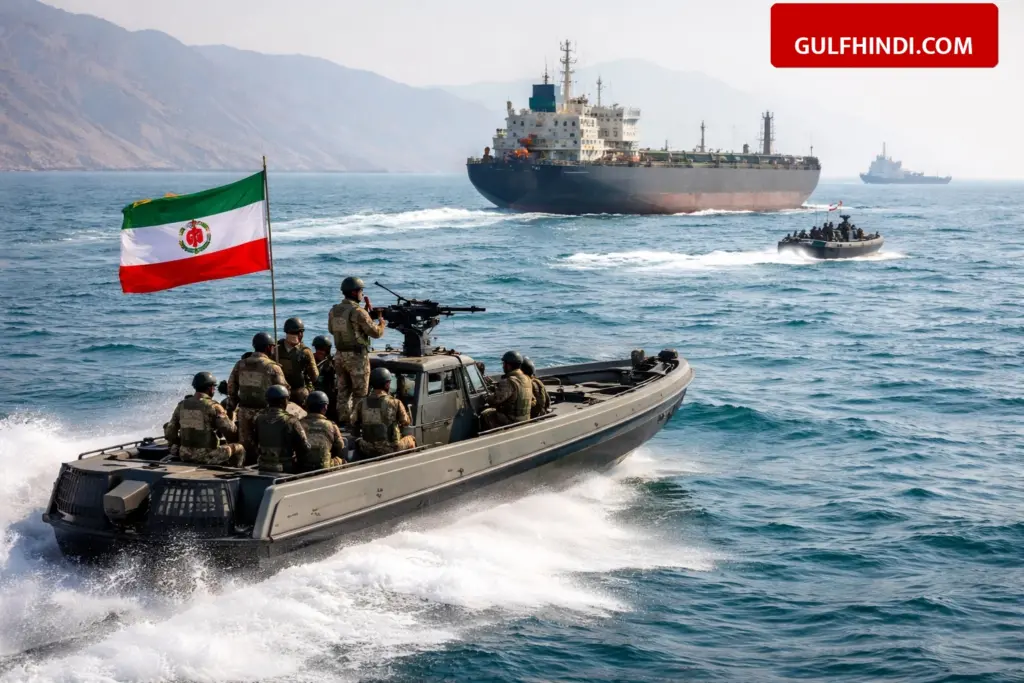
On March 10, 2026, Iran has issued a big statement regarding the Strait of Hormuz. Secretary of Iran’s Supreme National Security Council, Ali Larijani, has said that this path will either be a path of relief for everyone, or it will become a cause of suffocation for those who dream of war. This statement came after US President Donald Trump’s warning in which he had talked about tough attacks on Iran. This can have a direct impact on Indians and business living in Gulf countries because the supply chain is being badly affected due to the stoppage of movement of ships.
What is the new rule for passing through the Strait of Hormuz?
The Islamic Revolutionary Guard Corps (IRGC) has imposed new conditions for passing through this sea route. From March 11, 2026, Arab and European countries will be given complete freedom to pass through this route, but for this they will have to accept a big condition from Iran.
Arab and European countries will have to expel the ambassadors of America and Israel from their countries. Iran’s Ambassador to China Abdolreza Rahmani Fazli has clarified that the road has not been completely closed but some rules have been imposed for security reasons. IRGC has given a strict warning that if the attacks by America and Israel continue, not even a liter of oil will be allowed to go out from here.
Impact on global trade and shipping companies
Due to this tension, the world’s big shipping companies have changed the route of their ships. At present, the 11th day of ‘Operation Epic Fury’ is going on and the attacks by America and Israel are continuing.
Big companies like Maersk, MSC and Hapag-Lloyd have stopped their ships from this route. Many companies, such as the London P&I Club, have canceled insurance cover for ships bound for the Persian Gulf. There is news of LNG gas production in Qatar being affected and Saudi Arabia is stopping missile attacks. The US Navy is preparing to provide security to oil tankers, while Iran has deployed its drones and missiles to respond.
Due to this entire controversy, goods from the electronics and automotive industries across the world are stuck in Gulf countries. Expatriates working in the Gulf may also have to face rising inflation and delays in the supply of goods.