
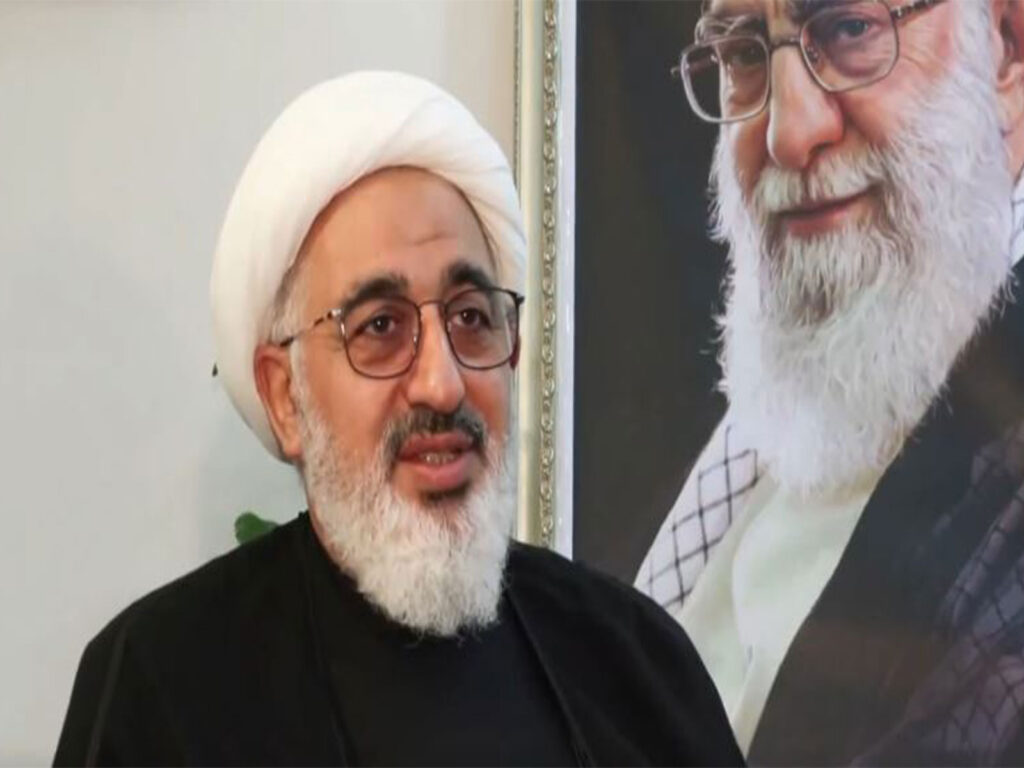
Abdul Majeed Hakim Elahi, representative of the Supreme Leader of Iran in India, emphasized how much emphasis former Supreme Leader of Iran Ayatollah Ali Khamenei placed on establishing deep relations with India. Referring to the historical and long-term relations between the two countries, he said that Iran does not want any kind of conflict or problem in relations with India.
He made these comments in an exclusive interview with news agency ANI.
Abdul Majid Hakim Elahi said, “The friendship between Iran and India goes back more than five thousand years. Iranians are connected to Indians through culture, civilization, philosophy and spirituality. The first book that our Supreme Leader, Ayatollah Uzma Seyed Ali Khamenei wrote, was about India and was published in two volumes. This shows that he loved India. And he many times expressed good cooperation and coordination between Iran and India. But insisted on.”
He added, “Even his son, because whenever I went back to Iran, I would meet him, and he would emphasize good cooperation with India and praise Indians. He would say: ‘They are very loyal, very honest, very kind, very intelligent, very nice people.'”
“So we don’t want any kind of problem in our relationship and friendship, and I am sure there is no conflict or problem in our relationship, which started long ago and will continue further,” Elahi further told ANI.
During the interview, he also rejected US President Donald Trump’s claim that Tehran is seeking talks as the conflict in West Asia escalates. Iran’s supreme leader’s representative in India, Abdul Majid Hakim Elahi, on Saturday rejected the claims, saying Tehran was ready to continue the war “even for five years”.
Speaking in an interview with ANI, Elahi strongly denied that Iran currently wants to negotiate with the United States, and said that Washington itself had targeted Tehran in the midst of talks.
He said, “No. Not at all. Iran does not want to negotiate with them at this time because they are the ones who started this war. And we have experience with them. Twice we were negotiating with them, and they attacked us. They targeted us.”
Illahi said Tehran will not bow down to its enemies and is ready for a long struggle if necessary. Drawing a comparison with the conflict between Iran and Iraq, the representative said Iran has the experience of enduring long wars.
He said, “I don’t know any timeline for this war. But what I know is that Iran is ready to continue this war till the end, even for five years. And we have the experience of war. At that time we had eight years of experience in the war between Iran and Iraq. And we are ready. And if you go to the streets of Iran, you will see that all the people are present there, and they are shouting slogans of vengeance. And they say that we are ready to shed our blood, but We are not ready to give our land.”
Elahi also said that Iran had made several efforts to prevent escalating tensions in the region and urged neighboring countries to help prevent conflict in the Middle East.
He said, “We did not want war. We tried many times to avoid any kind of war in this region. We even informed our neighbors that they should try to save the region from this war because this region cannot tolerate any more war.”
His comments come amid the deteriorating security situation in West Asia and the Gulf region, where Iran’s 86-year-old supreme leader, Ayatollah Ali Khamenei, was assassinated as a result of US-Israeli strikes.
The current round of conflict in West Asia, which began on February 28, has seen a fight between Israel and the United States on one side and Iran on the other.
Meanwhile, United Nations Secretary-General Antonio Guterres expressed serious concern over the growing crisis in West Asia, warning that the situation is a major threat to global peace and security. Earlier in a post on Twitter, Guterres said the conflict has caused immense suffering to civilians and urged all sides to reduce tensions and move towards dialogue.
The UN chief called for an immediate end to hostilities, stressing that diplomacy is the only viable way forward.