
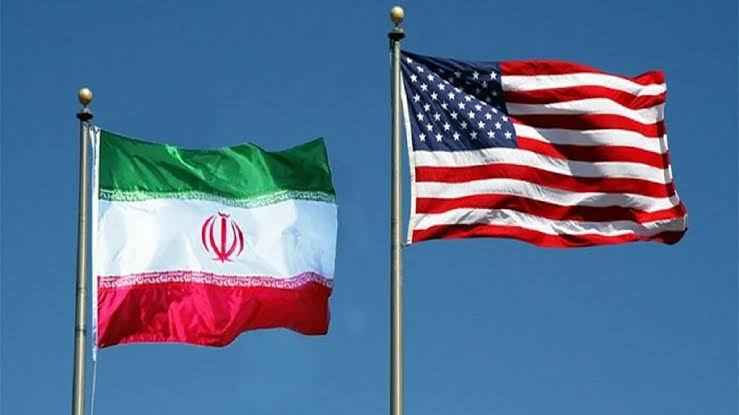
Iran’s parliamentary speaker Mohammad Bagher Qalibaf has warned that Tehran would view US military and commercial bases as “legitimate targets of retaliation” if Washington intervenes militarily amid ongoing unrest in the country.
Qalibaf said, “If the US takes military action against Iran or the occupied territories, US military and shipping facilities will be considered legitimate targets. We are not limited to responding only after the action takes place.”
Qalibaf’s comments came after US President Donald Trump reiterated his threat to attack Iran if authorities use force to suppress nationwide protests sparked by growing public discontent against the government.
Trump said on Friday (local time) that the situation in Iran was being monitored very closely and expressed hope that protesters would be safe, while warning that if protesters were killed the US would intervene and hit the country where it hurts most.
Trump made these comments while answering media questions during a meeting with top oil and gas officials at the White House.
Trump said, “Iran is in big trouble. I think people there are taking over some cities that no one even thought about. We are monitoring the situation very closely. I have said clearly that if they start killing people like before, we will intervene. We will hit them where it hurts the most, and that does not mean that we will send troops directly, but it means that we will hit them where it hurts. “They suffer the most, so we don’t want that to happen.”
He described the events as “absolutely unbelievable” and said the authorities “treated their own people very badly.” He added, “But what’s happening in Iran is really unbelievable. It’s amazing to see. They’ve done a very bad thing; they’ve treated their people very badly, and now they’re having to suffer the consequences, so we’ll see what happens next. We’re keeping a close eye on it.”
Regarding the protesters, Trump said, “I hope the protesters in Iran stay safe because it is a very dangerous place right now, and I say again to the Iranian leaders, you better not start shooting because we will start shooting, too.”
As the protests intensified, the policy research organization Institute for the Study of War said protest activity in Iran had increased dramatically in both rate and intensity since January 7, including in major cities such as Tehran and northwestern Iran.
The regime has also stepped up its repressive crackdown, including taking the rare step of using Islamic Revolutionary Guards Corps (IRGC) ground forces to suppress protests in at least one province, the think tank said.
In this backdrop, Iran’s Supreme Leader Ayatollah Ali Khamenei accused the US administration of being behind the massive protests in Iran.
Speaking at a public event on 9 January, Khamenei said that the protesters were doing so to please the US President.
Iranian state media quoted Khamenei as saying, “There are some people whose only job is to cause sabotage. Last night in Tehran and in some other places, some troublemakers came and demolished a building of their own country. For example, let’s say they demolished a building or a wall to please the President of America. Because they said some absurd things. That “If the Iranian government does so-and-so, I will support you. I will take your side.” The side of these rioters and persons harmful to the country. The hopes of these people are pinned on him. They should manage their own country if they can! There are many incidents happening in their own country.”
Accusing Trump of arrogance, Khamenei said that autocratic rulers are deposed only at the peak of their arrogance. “Our country does not tolerate the recruitment of mercenaries by foreigners,” he said.
Khamenei was quoted by Iranian state media as saying, “No matter who you are, once you become a mercenary for a foreigner, once you start working for a foreigner, the nation considers you a reject. As for him (Trump) who is sitting there with arrogance and arrogance passing judgment on the whole world, he should also know that generally, autocratic and arrogant rulers of the world—like Pharaohs, Nimrud, Raza Khan, Mohammad Raza, and their ilk—were overthrown just when they were at the peak of their arrogance. This too will be overthrown.”
Protests have spread across Iran since late December, with growing calls for an end to the theocratic system that has been in place since the 1979 Islamic revolution.
Human rights groups have urged restraint amid reports of deaths and mass arrests. The Iran human rights group said at least 51 protesters were killed by security forces, including nine children, and hundreds more were injured, Al Jazeera reported.
Iran’s Tasnim news agency reported on Saturday that at least 200 “riot” leaders had been arrested.
Amnesty International criticized the “widespread internet shutdown” imposed by Iranian authorities, saying it was intended to “conceal the true extent of serious human rights violations and crimes under international law being committed” in order to crush the protests.
On Saturday, Iran’s Attorney General Mohammad Movahedi Azad warned that anyone joining the protests would be considered an “enemy of God,” subject to the death penalty, state television reported.
Iran’s elite Islamic Revolutionary Guard Corps (IRGC) also warned that protecting the achievements of the 1979 revolution and the country’s security is a “red line”, state TV reported, Al Jazeera reported.
As political voices outside Iran also expressed their opinions, Reza Pahlavi, the US-based son of Iran’s deposed Shah, urged Iranians to organize more targeted protests aimed at seizing city centers and keeping them under their control.
“Our goal is no longer just to take to the streets. Our goal is to prepare to capture city centers and put them under our control,” he said in a video message on social media. He called for protests on Saturday and Sunday.
However, Iranian officials continued to describe the protesters as unruly, and Khamenei labeled the protesters “troublemakers”.
In a speech broadcast on Press TV, Khamenei said that Trump’s hands were “stained with the blood of more than a thousand Iranians”, apparently a reference to Israel’s attacks on Iran in June, which the US had supported and joined in its attacks.
He said, “Everyone knows that the Islamic Republic came to power with the blood of hundreds of thousands of honorable people; it will not retreat in the face of the destroyers.”
Iran’s Foreign Minister Abbas Araghchi has accused the US and Israel of “direct interference” in an attempt to “turn peaceful protests into divisive and violent demonstrations”, which a US State Department spokesperson described as “delusional”.
Al Jazeera reported that the demonstrations are the largest in Iran since the 2022-2023 protest movement, which began after the death in custody of Mahsa Amini, who was arrested for allegedly violating Iran’s strict dress code for women.
It further added that although the demonstrations have been sporadic, they have increased in recent days, particularly in Tehran.
The report said, “The state’s response began by recognizing people’s right to peacefully protest, but as the situation began to deteriorate, the state is trying to draw a line between the protesters and those whom Supreme Leader Ayatollah Khamenei calls ‘destroyers’ – against whom, it said, the Islamic Republic is not going to bend.”
It added, “Public discontent exists – whether people take to the streets or not. Many people here are now eager to see how the government responds not only to the protests, but also to the economic difficulties they face in their daily lives.”
The government has attempted to control the situation by tightening safety measures and introducing a monthly subsidy of about US$7 for low-income people facing difficulty in purchasing daily essentials.