
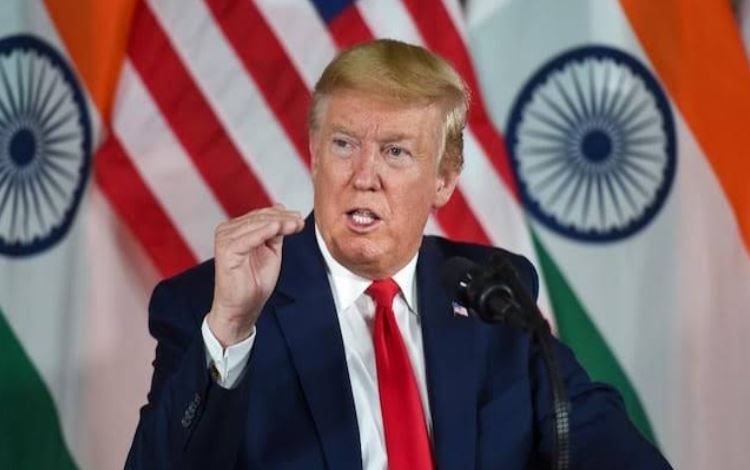
US President Donald Trump reiterated his claim that there was a “war going on” between India and Pakistan and it was he who ended the conflict between the two neighboring countries armed with nuclear weapons. Trump has so far claimed about 70 times that he had stopped the conflict between India and Pakistan in May.
“In 10 months, I ended eight wars, including the ones between Kosovo (and) Serbia, Pakistan and India, Israel and Iran, Egypt and Ethiopia… Armenia and Azerbaijan, they were fighting each other,” Trump said Tuesday while addressing his supporters at a rally on the economy in Mount Pocono, Pennsylvania.
India had launched ‘Operation Sindoor’ on the night of May 6 and 7, targeting terrorist infrastructure in Pakistan and Pakistan-occupied Kashmir in response to the attack in Pahalgam on April 22. 26 civilians were killed in the Pahalgam terrorist attack.
India and Pakistan agreed on May 10 to end the conflict after four days of cross-border drone and missile attacks. India has consistently denied any third party intervention in the resolution of the conflict.
Meanwhile, Trump said fighting had resumed in Cambodia and Thailand and he would call those countries “tomorrow.”
Trump said, “Who can say that I will stop the ongoing war between two very powerful countries like Thailand and Cambodia by making a phone call? They are fighting among themselves. But I will do it. Therefore we are establishing peace through force. That’s what we’re doing.”
On the issue of immigration, Trump said that for the first time in 50 years, more jobs, better wages and higher incomes are being ensured for American citizens and not for illegal immigrants. He said he has announced a permanent ban on migration from “hell-like places” such as Afghanistan, Haiti, Somalia and many other countries.
Last month, Trump said he would “permanently halt” immigration from “all Third World (developing/underdeveloped) countries” and deport foreign nationals who are a “security risk” as his administration stepped up its crackdown on immigration following the killing of a National Guard member by Afghan national Rahmanullah Lakhanwal.
The US Citizenship and Immigration Services has issued new guidelines allowing it to consider “negative, country-specific factors” when screening citizens from 19 high-risk countries.
These countries include Afghanistan, Burma, Burundi, Chad, Republic of Congo, Cuba, Equatorial Guinea, Eritrea, Haiti, Iran, Laos, Libya, Sierra Leone, Somalia, Sudan, Togo, Turkmenistan, Venezuela and Yemen.