
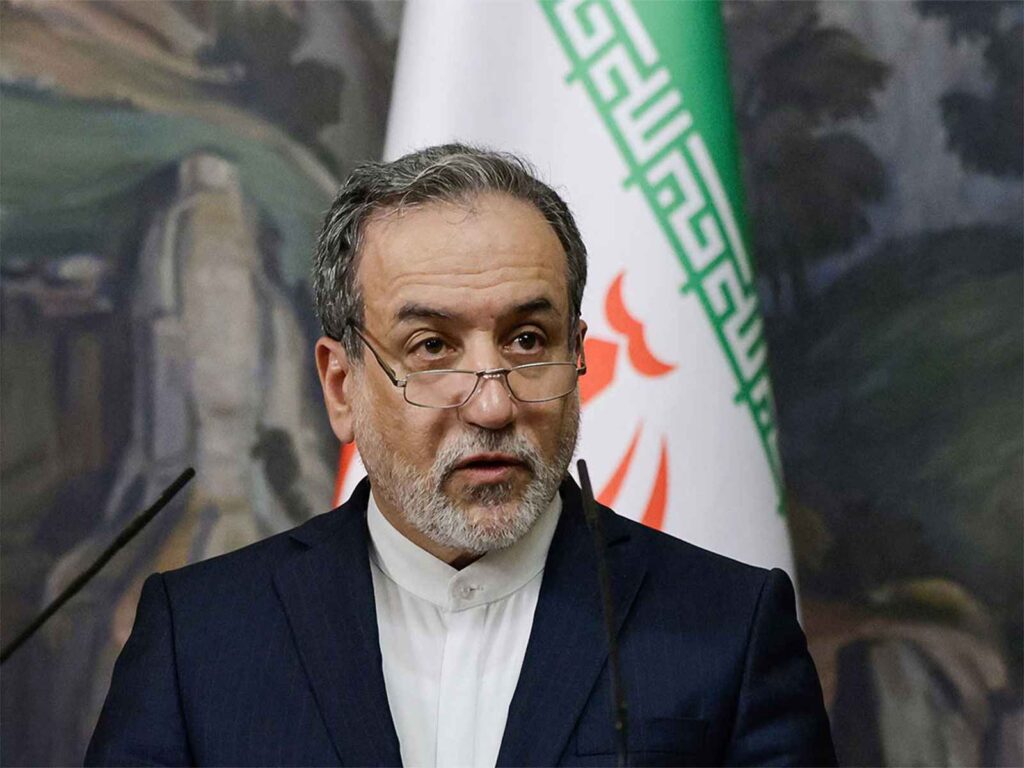
Iranian Foreign Minister Seyed Abbas Araghchi has rejected the possibility of re-engaging in diplomatic talks with Washington, citing a history of failed promises and military aggression.
“But I don’t think the question of negotiating with the Americans or re-negotiating with them will arise because our experience of negotiating with the Americans has been very bitter,” the foreign minister said in an interview with PBS News.
Reflecting on past diplomatic efforts, Araghchi claimed that Tehran had made efforts in good faith, but that it faced renewed hostility as a result.
He said, “We had talks with them in June last year, and they attacked us in the middle of the talks. And this year also they tried to convince us that this time the situation is different. They assured us that they have no intention of attacking us, and they want to resolve the Iran nuclear issue peacefully and find a solution through negotiations.”
The External Affairs Minister further said that despite reports of diplomatic successes, the US has chosen the path of conflict.
He said, “And finally we agreed. But, after three rounds of talks, and despite the US team involved in the talks themselves saying that we had made a lot of progress, they still decided to attack us. So I don’t think it would be our priority now to negotiate with the Americans.”
Addressing the recent internal leadership change following the election of Mojtaba Khamenei as the new supreme leader, Araghchi described the move as a sign of “continuity as well as some kind of stability.”
He acknowledged the importance of this selection, but suggested that the specific policy stances of the new leader would be revealed in due course.
Araghchi explained, “Well, first of all, it is too early for him to make any comments. We are all waiting for his speeches and remarks, which will come later.”
As the military conflict entered its tenth day, the foreign minister claimed that the US and Israel’s objectives for a quick victory had failed.
He commented, “Actually, they tried to achieve some goals, but they failed. They thought they could change power in two-three days, achieve a quick and clean victory, but they failed.”
Regarding disruptions in global energy supplies and rising oil costs, Araghchi denied that Tehran was carrying out a deliberate plan to block the market.
Instead, he attributed the instability to external military actions, saying, “It is not our fault. It was not our plan. The decline or halt in oil production and oil transportation is not because of us, but because of the attacks and aggression against us by the Israelis and Americans.”
The External Affairs Minister argued that maritime insecurity in the region is a direct result of foreign interference.
He said, “That is why tankers and ships are afraid to pass through the Strait of Hormuz. We have not closed that strait. We are not stopping them from moving through that strait. But this is the result of the aggression of the Israelis and Americans, which has made the entire region unsafe and unstable.”
Arghachi also responded to charges related to the deadly attack on a girls’ school in Minab, which killed more than 170 people.
Rejecting American denials, he said, “That’s ridiculous. I think all the American media and American intelligence agencies and various American media sources have accepted that this was done by an American missile.”
Defending Iran’s military action against neighboring countries, the Foreign Minister called it a necessary action for self-defense.
Araghchi said, “Actually, this war has been imposed on us. And what we are doing is only self-defense. We are facing an invasion, which is completely illegal. And what we are doing is self-defense, which is legal and legitimate.”
He dismissed concerns that the conflict could damage long-term regional relations, arguing that Tehran’s right to defend its own people is more important.
He said, “If they have every right to take all necessary measures to protect their facilities, then I think we have even more rights than them – we have the right to take all necessary measures to protect ourselves, to protect our people.” He confirmed this, saying that Iran is “fully prepared to continue attacking them with its missiles as long as needed and as long as necessary.”