
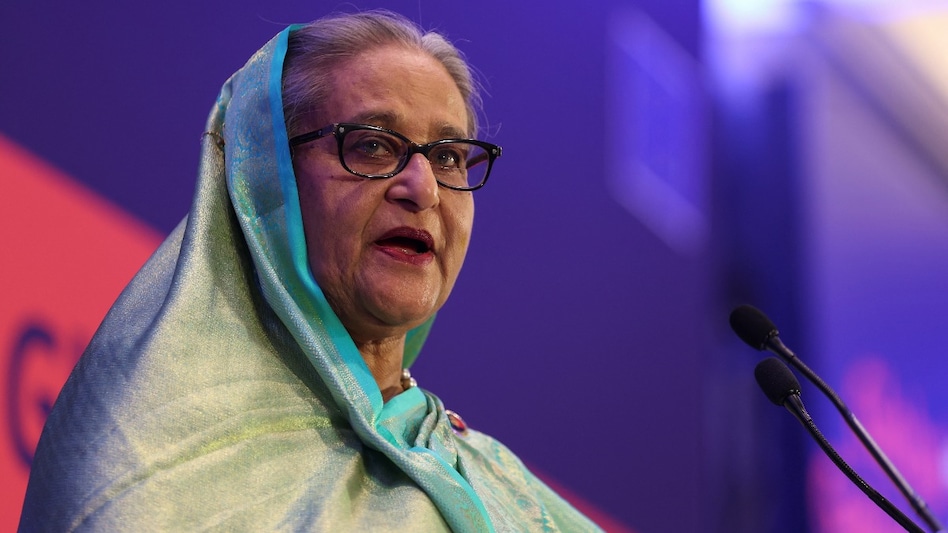
The increasing incidents of violence in Bangladesh, including the lynching of a Hindu man, have left India with deep concern, especially in the wake of recent threats by radical groups to Indian embassies in the country. Former Bangladesh Prime Minister Sheikh Hasina believes that the strained relations between India and her country are entirely the result of the interim government led by Mohammad Yunus.
The former Bangladesh prime minister accused the Yunus government of issuing hostile statements against India and failing to protect religious minorities.
He said, “The tensions you are seeing are entirely the creation of Yunus. His government issues hostile statements against India, fails to protect religious minorities, and lets extremists dictate foreign policy, then expresses surprise when tensions escalate. India has been Bangladesh’s staunchest friend and partner for decades. The ties between our countries are deep and fundamental; they will endure much longer than any temporary government. I am confident that once legitimate rule is restored Upon leaving, Bangladesh will return to the wise partnership we have developed over fifteen years.”
Sheikh Hasina said, “This hostility is being created by extremists who have been emboldened by the Yunus regime. These are the same people who stormed the Indian Embassy and attacked our media offices, who attack minorities with impunity and who forced me and my family to flee for our lives.”
He said, “Yunus has placed such people in positions of power and released convicted terrorists from jail. I regret that the concerns India has about the safety of its personnel are justified. A responsible government would protect diplomatic missions and prosecute those who threaten them. Instead, Yunus gives immunity to goons and calls them warriors.”
Hasina’s comments come days after India’s External Affairs Ministry summoned the Bangladeshi Ambassador to New Delhi over security concerns related to the protests outside Indian High Commissions in Bangladesh.
In response, Dhaka had earlier summoned India’s High Commissioner to express its objection over “anti-election activities” involving Bangladeshi political figures living in India.
Hasina, who has been living in India since her government was ousted from power following mass protests last year, defended New Delhi’s long-standing ties with Dhaka.
He said, “India has been Bangladesh’s staunchest friend and partner for decades. The ties between our countries are deep and fundamental; they will endure far longer than any temporary government.”
He further said that once “legitimate governance is restored”, Bangladesh would return to the “sensible partnership” developed during his 15-year tenure.
Diplomatic exchanges intensified after Bangladesh summoned India’s High Commissioner Prannoy Verma on December 14, alleging that “fugitive political persons” including Hasina were engaged in activities from Indian soil aimed at influencing parliamentary elections in Bangladesh scheduled for February next year.
Rejecting these allegations, New Delhi reiterated that India has never allowed its soil to be used for activities detrimental to the interests of the people of Bangladesh. India’s Ministry of External Affairs stressed that it is committed to a stable and democratic Bangladesh.
Tension increased further after the assassination of Inquilab Mancho leader Sharif Usman Hadi. He was shot dead in Dhaka on 12 December and later died in Singapore on 18 December. His death was followed by widespread protests across Bangladesh, including demonstrations outside Indian diplomatic missions.
Following reports of security threats to the Indian High Commission during these protests and inflammatory anti-India statements by Bangladeshi student leaders, India summoned the Bangladeshi Ambassador to New Delhi.
On the death of Usman Hadi, Sheikh Hasina alleged that “chaos” had increased under the leadership of chief advisor Muhammad Yunus, due to which her rule had fallen into disarray. The former Prime Minister also raised the issue of atrocities against minorities in the country and said that India is “watching this anarchy”.
Sheikh Hasina said, “This tragic assassination reflects the anarchy that overthrew my government and has escalated under Yunus’ rule. Violence has become commonplace, while the interim government either denies it or is unable to stop it. Such incidents destabilize Bangladesh internally, as well as strain relations with our neighbours, who are watching with justified concern.”
“India is witnessing anarchy, atrocities on minorities and the erosion of everything we have built together. When you cannot maintain basic order within your borders, you lose credibility on the international stage. This is the reality of Yunus’s Bangladesh,” he said.