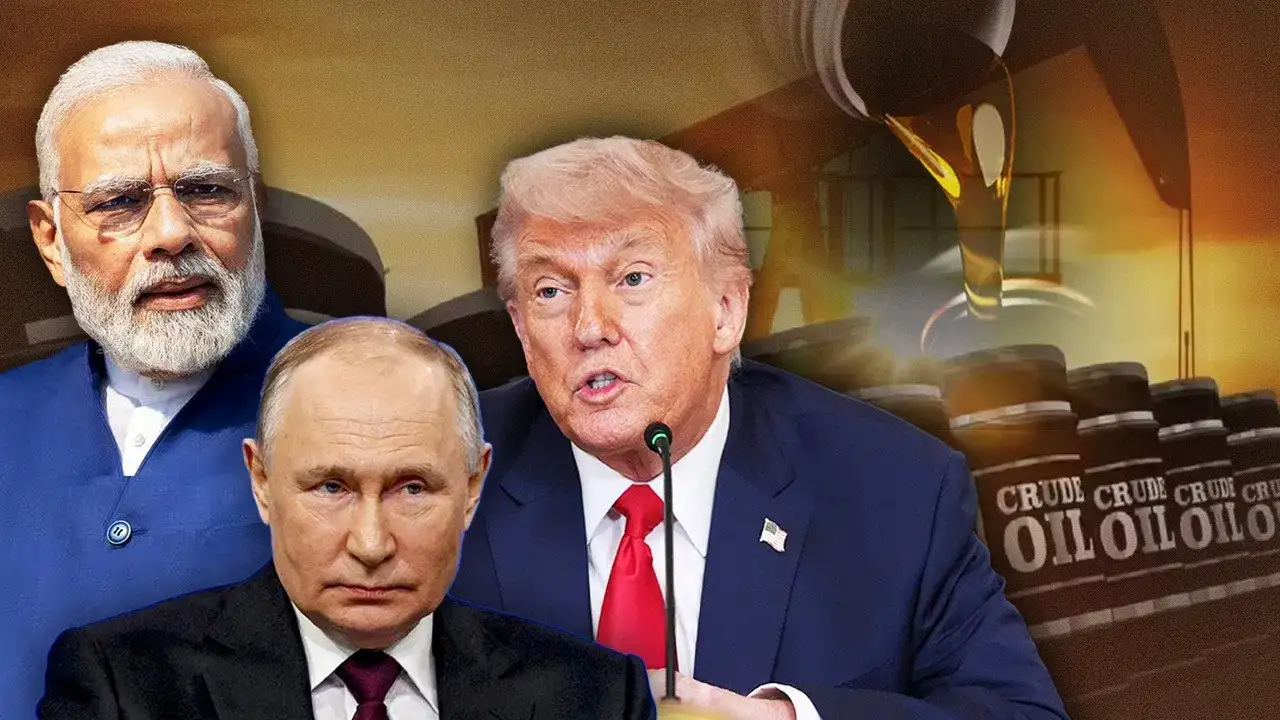
After the US announced sanctions on Russian oil companies Rosneft and Lukoil on October 22, India is witnessing a sharp decline in Russian oil supplies. Russian crude oil exports to India averaged 1.19 million barrels per day in the week ended October 27, down significantly from 1.95 million barrels per day in the previous two weeks, according to provisional tanker data from global commodity data and analytics provider Kpler.
Significant decline in supplies from Rosneft and Lukoil
The sanctions have had a direct impact on supplies to Russia’s two largest oil companies, Rosneft and Lukoil. Rosneft’s oil exports to India fell to 0.81 million barrels per day in the week ended October 27, compared to 1.41 million barrels per day in the previous week. LUKOIL did not record any oil shipments to India during this period. It takes about a month for oil tankers from Russia to reach India via the Suez Canal. Therefore, experts believe that this decline is a result of already low shipments being sent in view of the November 21 deadline set by the US. Till then, pre-contracted oil supplies will continue at Indian ports.
Response of Indian refineries
According to an Indian Express report, Indian refineries have also started taking precautionary measures after the US sanctions. HPCL-Mittal Energy has already announced that it will temporarily suspend imports of Russian oil. Indian Oil Corporation (IOC) has said it will comply with all sanctions imposed by the international community, although the company did not make any direct statement on future Russian oil imports. Reliance Industries Ltd (RIL), which handles about half of India’s total Russian oil imports, has said it will fully comply with government guidelines and is evaluating the impact of the restrictions. Experts say Indian companies and banks are avoiding any risky transactions involving Russia due to fear of US secondary sanctions.
Why will the share of Russian oil decline?
At present, Russian oil contributes about 35% to India’s total oil imports. However, this share is expected to gradually decline following the US measures. After the sanctions were announced, Indian refineries have stepped up supplies of Russian oil ahead of the November deadline. After November 21, most refineries will stop imports from banned companies. However, some oil will continue to come from Russia through non-restricted intermediaries, but the volume will be reduced. The US Office of Foreign Assets Control enforces these economic sanctions. India’s average Russian oil imports in October averaged 1.62 million barrels per day, roughly equal to September’s 1.61 million barrels.
Fear of sharp decline in December-January
December and January will see a significant decline in Russian oil imports as refineries look for new supply sources. However, a complete ban on imports is unlikely, as Russian oil is still affordable for the Indian market. Unless the Indian government formally bans imports, limited quantities of Russian oil will continue to flow into India through intermediary channels.
turning to new sources
Indian refineries are now preparing to buy more oil from West Asia, West Africa, Latin America and North America to compensate for the shortfall in imports from banned Russian suppliers. India is the world’s third largest oil consumer and imports about 88% of its needs.