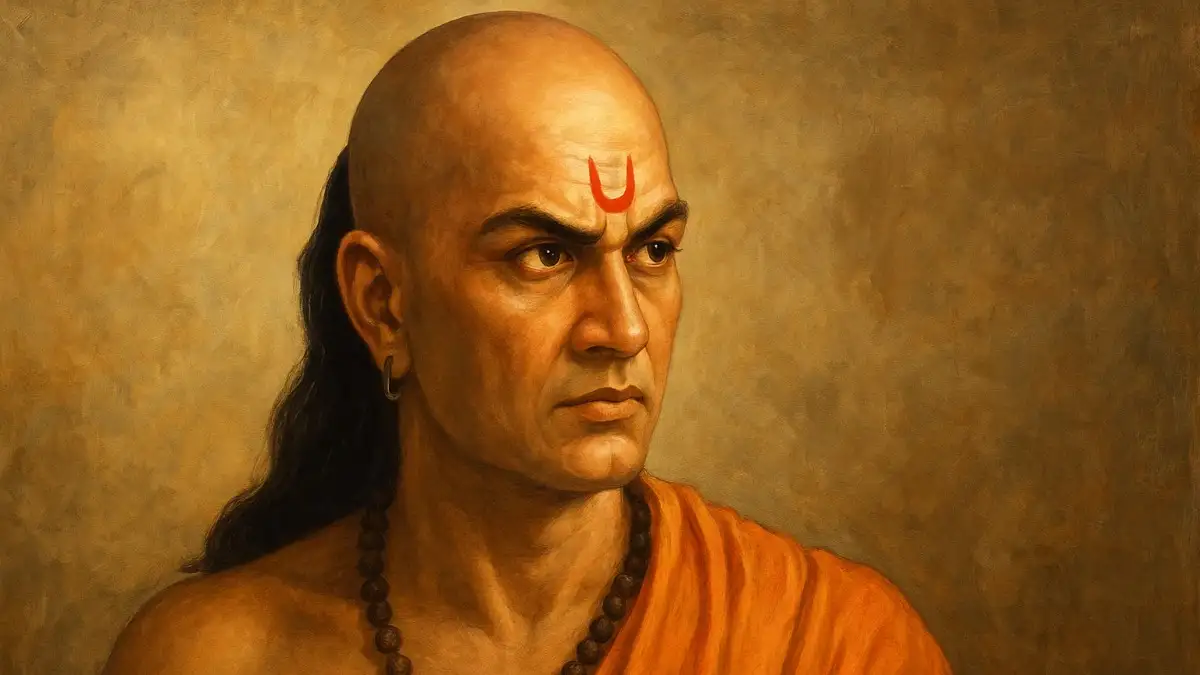
Whenever politics is discussed not only in the country but across the world, “Chanakya” is a name that automatically comes to mind. Along with Chanakya, the name of Chandragupta Maurya also comes, who established the Maurya Empire by ending the rule of the Nanda dynasty in Magadha. It is also ironical that many historians consider Chandragupta’s presence in history as authentic, but consider Chanakya’s presence in the court as his guru, guide and chief advisor as pure imagination.
Why is Chanakya considered a fictional character?
Although earlier historians considered Chanakya to be a historical figure, history is a subject of constant research and exploration. Therefore, later, or rather modern, historians gradually began to believe that there is a lack of authentic evidence of Chanakya’s existence, as most of the reference texts that mention and discuss Chanakya are much later than the time of Chandragupta, about 200 to 400 years later.
Who wrote Arthashastra?
The Arthashastra is believed to be written by Chanakya, but the examples mentioned in it are not contemporary to Chandragupta. Writer Devdutt Patnaik has emphasized this in an article published in the Indian Express. He writes that the Chinese silk and Roman gold coins mentioned in the Arthashastra reached India 400 years after the Maurya rule. However, historians also believe that Arthashastra is not a creation of any one period and written by any one author, but it could have many authors, who composed it at different times.
What is the history of Chanakya?
A popular history has it that a brilliant Brahmin named Vishnugupta Chanakya first dreamed of a united India, understood the intentions of foreign invaders, and when he took the lead in uniting the kingdoms against it, he was insulted by Dhanananda, the last ruler of the Nanda dynasty. Chanakya loosened his crest and vowed that he would neither rest nor tie his crest until he destroyed the Nanda dynasty and established a worthy ruler.
Chanakya was the prime minister not only of Chandragupta but also of Bindusara.
Thus, in these “historical” narratives, Chanakya is depicted as a determined Brahmin, where his image is similar to that of great sages such as Vashishtha, Vishwamitra and Parashurama. This talented Brahmin helped the first Maurya emperor Chandragupta to rise to power and establish the Maurya Empire. After Chandragupta Maurya, Chanakya was also the chief advisor and prime minister of his son Bindusara.
A character comes alive through legends
Although Chanakya’s existence appears through popular legends, and given the widespread presence of ancient figures for nearly 3,000 years, his existence cannot be completely ruled out.
What do historians say?
Historian Salil Mishra gives his opinion on this subject, saying, “Chanakya is a historical person whose existence cannot be denied. It is possible that the famous text dedicated to him, Arthashastra, may have been composed by more than one person, but there is no doubt in the historical fact that a person named Chanakya had an important place in the court of Chandragupta Maurya.”
Historical period of Ghanananda
Although the character Chanakya is mentioned in various stories and documents, these documents are more imaginary than historical evidence and there is a strong possibility of them being imaginary. The second major reason is that none of these texts correspond to the period of Chandragupta and Chanakya; All are much later. The empire of Ghanananda is believed to be around 323 BC. American historian Thomas Trotman identifies four versions and legends that belong to different periods, but in which Chanakya’s presence is prominent.
Chanakya’s presence in the Buddhist text Mahavamsa
Chanakya is mentioned in the fifth-sixth century BC. During this period, a Buddhist text called Mahavamsa was composed, which mentions the famous and powerful kings of India and Sri Lanka. Chandragupta is one of them. This is the only place where the names of Chandragupta and Chanakya come together. This text was originally written in Pali.
Chanakya is also a major character in Jain texts.
Similarly, Parishittaparvan, a major text of Jainism, was written by Hemachandra in the 12th century AD. This text describes how Chandragupta first became emperor under the guidance of Chanakya and then later adopted Jainism. This text is based on sources from the first to eighth centuries.
Kathasaritsagara, Brihatkatha-Manjari and Badkatha
However, the most prominent example is Kathasaritsagara, composed in the 10th–11th century. Its author was Somdev. This text was also not written in one go; Kshemendra had earlier written Brihatkatha-Manjari, whose stories are also similar to Kathasaritsagara. The stories of both these texts are similar as their base text is Brihatkatha, which is said to contain innumerable folktales and legends. It was also called Badkatha. However, the larger story is now lost. Along with many stories of kings and emperors, this text also contains stories of Chandragupta and Chanakya, which throw light on the existence of Chanakya’s personality. It is a Kashmiri version of the stories of Chandragupta and Chanakya.
Mudrarakshasa…which brings together Chandragupta and Chanakya
Its most accurate and authentic version is found in Mudrarakshasa. This is considered to be the first text in which Chanakya’s name has been prominently mentioned along with Emperor Chandragupta. This play, composed by Vishakhadutta in the fourth century AD, is considered imaginary, but historians have consistently disputed its complete imaginaryity and have believed that there must have been some inspiration behind such a creation, because without inspiration, a work that remains relevant even after so many centuries cannot be composed.
Chanakya in various works
Ankit Jaiswal, a researcher in ancient history at Gorakhpur University, says that “There is no historically accurate mention of Chanakya and this character is completely imaginary. Chanakya appears in works written in different periods, but there is no mention of Chanakya in the contemporary evidence of Chandragupta.”
“The question of whether Chanakya existed or not is unnecessary.
Author Request Sharma, who writes on historical and mythological personalities, says that the question of whether there was a person named Chanakya or not is unnecessary. He says, “You should consider the veracity and accuracy of the teachings and principles propagated in his name. Our tradition has been, ‘Don’t ask the caste of the saint, ask the knowledge.’ If they are true, compatible with life, or useful in some area or time, then they should be adopted. Fictional stories also teach us morality. We remember their moral values and don’t care what the story was or wasn’t. The ultimate truth is to learn the right thing—the right knowledge. In 1513, the Italian diplomat Niccolo Machiavelli wrote a small book, “The Prince”, in which Machiavelli writes that a king should be merciful, but only as much as necessary. Not so much that the subjects or his subordinates feel that the king can be disobeyed. It is good to be generous and nice, but not so much that the treasury becomes empty.
Machiavelli attempts to explain this more clearly in another of his chapters, “The Characteristics of a King: Cruelty versus Mercy”. He first raises the question whether the subjects should love or fear the king, and then answers it. Machiavelli says that theoretically, a person would like to be loved and feared, but since it is difficult to get both at the same time, human nature is to blame. If you can’t achieve both, it’s better for people to fear you than to love you.
Relevance of Chanakya and Chanakya policy
This was said, written and even practiced in India centuries before Machiavelli wrote “The Prince.” Chanakya has also mentioned similar things in Arthashastra and said that for a king, whom the subjects love and trust, it is necessary that the king should always be alert, his ears should be alert and his nose should be able to smell any pungent smell.