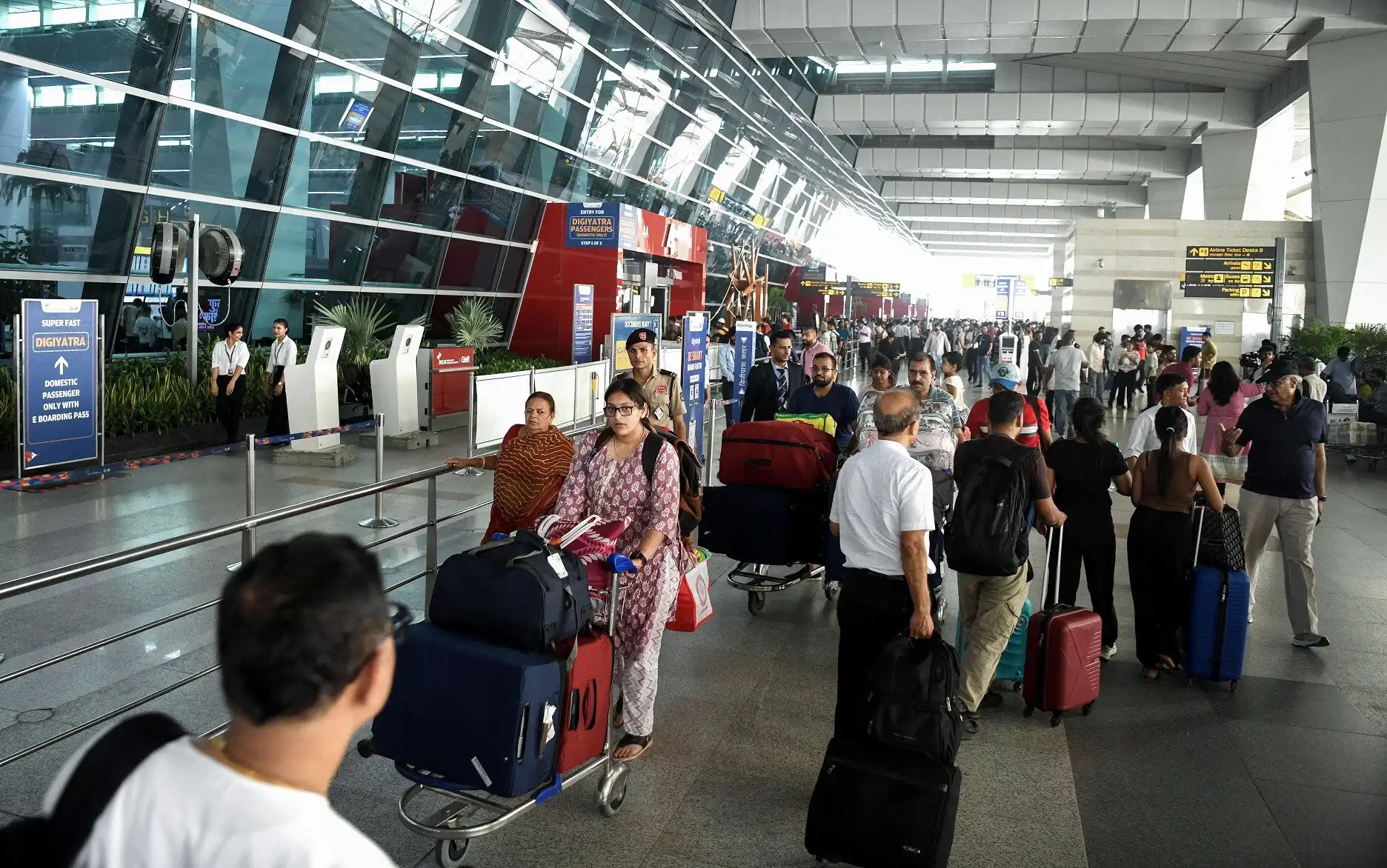
Passengers traveling through Delhi’s Indira Gandhi International Airport (IGI) and Mumbai’s Chhatrapati Shivaji Maharaj International Airport may soon get a big shock. The user charge component of an airline ticket at both major airports may increase by up to 22 times, leading to a huge surge in airfares. According to Business Today, this possible increase comes after the recent order of the Telecom Disputes Settlement and Appellate Tribunal (TDSAT). The order re-evaluates the formula for calculating airline tariffs between 2009 and 2014.
Due to this decision of the Telecom Disputes Settlement and Appellate Tribunal, the country’s two busiest airports, Delhi and Mumbai, have outstanding dues of more than ₹50,000 crore. This amount will now be recovered through Passenger Development Fee (UDF), Landing Fee and Parking Charge, which will have a direct impact on the pockets of passengers. This matter has reached the Supreme Court. The order of the Telecom Disputes Settlement and Appellate Tribunal has been challenged in the Supreme Court by the Airports Economic Regulatory Authority (AERA), several Indian airlines and foreign airlines like Lufthansa, Air France and Gulf Air. The bench of Justices Arvind Kumar and Nilay Vipinchandra Anjaria will hear the case on Wednesday.
How much impact will this have on passengers?
If the Telecom Disputes Settlement and Appellate Tribunal order comes into effect, the user development fees may increase as follows:
Delhi Airport:
Domestic passengers: Increase from ₹129 to ₹1,261
International passengers: Increase from ₹650 to ₹6,356
Mumbai Airport:
Domestic passengers: Increase from ₹175 to ₹3,856
International passengers: Increase from ₹615 to ₹13,495
The Telecom Disputes Settlement and Appellate Tribunal is the appellate body that hears financial disputes related to telecom and airports.
Government expressed concern
Government officials have expressed concern that such a huge increase will have a direct impact on the demand for air travel. A senior official said that whatever be the pros and cons of the order, passengers should not be embroiled in a lengthy legal tussle between the airlines and the airport operator. Such a huge increase in ticket prices overnight will be a big blow to passengers. Airports have their own monopoly, and airlines will be forced to pass on this growth.
When and how did the fight start?
The issue has its roots in the airport privatization process that began in 2006. AERA, the body that decides airport charges, was formed in April 2009, while control of Delhi and Mumbai airports was transferred from the Airports Authority of India to private companies in 2006. Delhi airport is run by GMR Group, while Mumbai airport was owned by GVK at that time and is currently run by Adani Group.