Amid frequent flight cancellations by private airline IndiGo, millions of people in India are wondering why there is no government airline company like Indian Railways. Despite its many problems, Indian Railways remains the only trusted travel partner for millions of Indians. People want to see the same confidence in the aviation sector also. But the story of the airline sector is not like that of the railways. Here, no government airline company has been successful for long. Indian Airlines was the first domestic government airline of India, established in 1953. It was formed after the nationalization of Tata Airlines and other small private airlines. Its main objective was to provide air connectivity to remote areas of the country.
Indian Airlines: India’s first domestic government airline
Initially, its fleet included aircraft such as the Douglas DC-3, Vickers Viscount, Caravelle and later the Fokker F-27. In the 1960s and 70s, it included the Boeing 737, the Airbus A300, and then the A320. Indian Airlines built a network across the country with hubs in Delhi, Mumbai, Kolkata and Chennai, and also operated flights to neighboring countries (Sri Lanka, Nepal, Bangladesh, Maldives, Pakistan).
After the 1990s, pressure on Indian Airlines increased with the arrival of private airlines (Jet Airways, Sahara Airlines, East-West Airlines). Its market share started declining. Heavy losses, an aging aircraft fleet, labor problems and political interference weakened it. Eventually, in 2007, the government merged Air India and Indian Airlines into a new company, ‘Air India Limited’. In 2011, both brands were completely phased out, leaving only ‘Air India’.
Journey from Tata Airlines to Air India
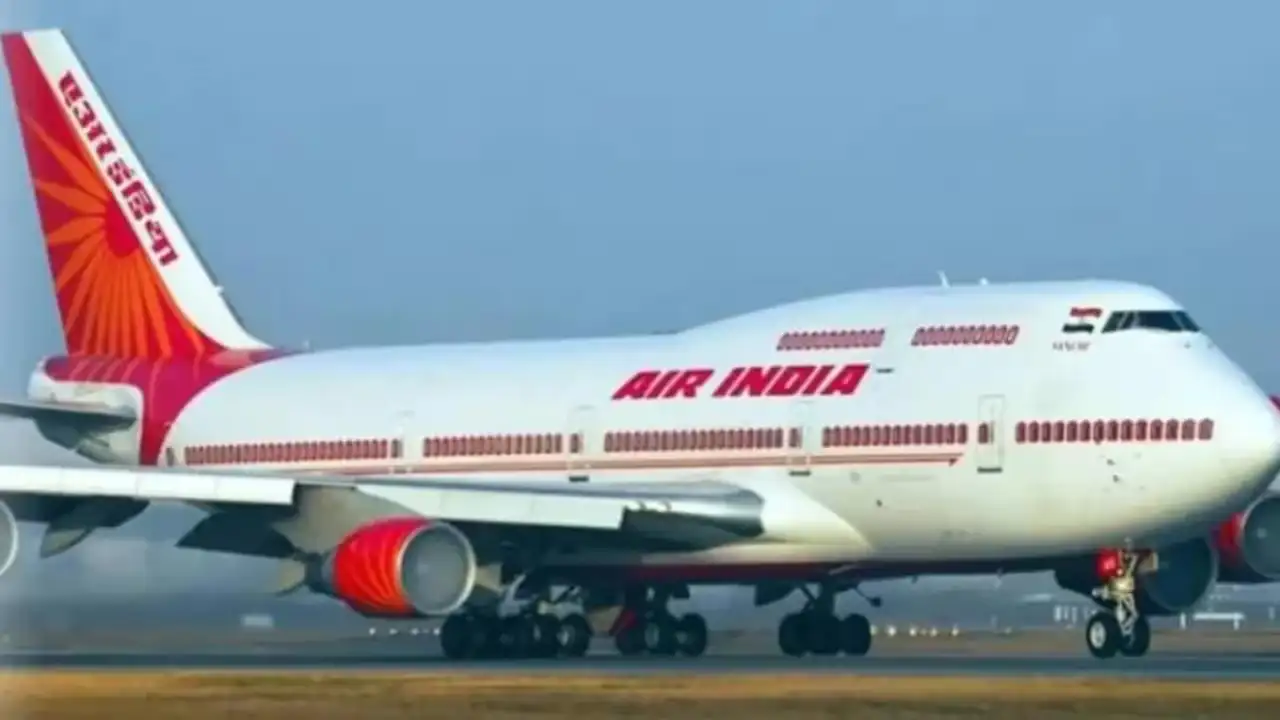
However, the story of aviation sector in India is incomplete without Air India. The story of Air India begins in 1932 with Jehangir Ratanji Dadabhoy Tata, the founder of Tata Sons. He laid the foundation of Tata Airlines and on October 15, 1932, he himself flew a small single-engine aircraft from Karachi to Mumbai. This was India’s first commercial flight. In 1946, the company was renamed Air India, and in 1948, it was partially nationalized. In 1953, the Nehru government completely nationalized it, making it the “national flag carrier” of India for international flights, while domestic flights were handed over to Indian Airlines. Air India added modern aircraft like Boeing 707 and 747 to its fleet. Its mascot, ‘Maharaja’, became famous throughout the world.
After 1990, the airline faced difficulties. With the entry of private airlines like Jet Airways, Kingfisher and Indigo, huge debt started accumulating on the company. In 2007, it was merged with Indian Airlines, but its condition did not improve. By 2021, Air India had a debt of over ₹60,000 crore. In January 2022, Tata Group repurchased Air India. After 90 years, the company has returned to the Tata family. Now, Tata is focusing on building a new fleet, expanding operations and reviving the brand.
Alliance Air: India’s only government-owned airline
Alliance Air is India’s only fully government-owned regional airline. It was launched in 1996 as a subsidiary of Indian Airlines under the name Air India Regional. Its objective was to connect small cities, tier-2 and tier-3 towns and north-eastern states by air. These were areas where the major airlines did not want to fly, so this responsibility was given to Alliance Air.
Initially, its fleet consisted of small turboprop aircraft with 30–50 seats, such as the Dornier 228 and ATR-42. Later, the 70-seat ATR 72-600 became its main aircraft. Even after the Air India–Indian Airlines merger in 2007, it remained a separate company. When Tata Group acquired Air India in 2022, Alliance Air remained with the government as it was the main operator of the UDAN scheme.
Currently, Alliance Air has 21 aircraft in its fleet and employs 111 pilots. It connects 59 domestic destinations within India and one international destination (Chennai to Jaffna in Sri Lanka) with 137 daily flights. Alliance Air primarily serves the Northeast, Jammu and Kashmir, Lakshadweep, Andaman and Nicobar Islands and smaller airports. It is the largest operator under the government’s ambitious UDAN (Ude Desh Ka Aam Nagrik) scheme. Fulfilling its government mandate, Alliance Air is the sole air service provider to many of these destinations. Although it does not run in profit, still the government is running it as a social responsibility. Alliance Air is still wholly owned by the Government of India.