DoT cancels mandatory communication companion preload on phones amid privacy controversy
Amid growing controversy over the government’s directive to install the Sanchar Saathi cyber security app from the factory on all new phones, the Central Telecom Department has scrapped it. The Department of Telecommunications had recently directed smartphone manufacturers to have this app already installed in every phone, which cannot be uninstalled. On this U-turn, the department says that the number of people adopting this service on their own has increased rapidly, hence there is no need to make it mandatory. A press release issued from the ministry said that this concession has been given due to the ‘increasing acceptability’ of the app. Nearly six lakh new downloads show that the app is naturally gaining popularity.
Opposition and defense of the government
appOn making it mandatory, the opposition said the order threatened to legitimize state-run software on private phones and could open up new avenues of surveillance. Major smartphone manufacturers had also expressed dissatisfaction over the decision. Apple had opposed the order, citing platform policy and privacy concerns.
Communications Minister Jyotiraditya Scindia told the MPs that the government’s attitude is not adamant and it will amend the instructions if needed. He reiterated that the purpose of the app is only to protect people from phone fraud and anyone can deactivate or delete it at any time. He urged the public that this app is only available, there is no compulsion to install it.
Scindia said, “Telecom is a medium to connect people with the world. It has many good aspects, but few people use it. It is the responsibility of the government to protect people from those with such ill intentions.” Speaking to reporters outside Parliament, he refuted the claim that the directive prohibited uninstalling the app. He said, “Don’t pay attention to rumours. It doesn’t say that you can’t uninstall the app. The app will remain installed on the phone so that users can use it whenever they want. Like any other app, the user can delete it too. Scindia further said that the government has only one goal, the safety of the general public.
What does a communication partner do?
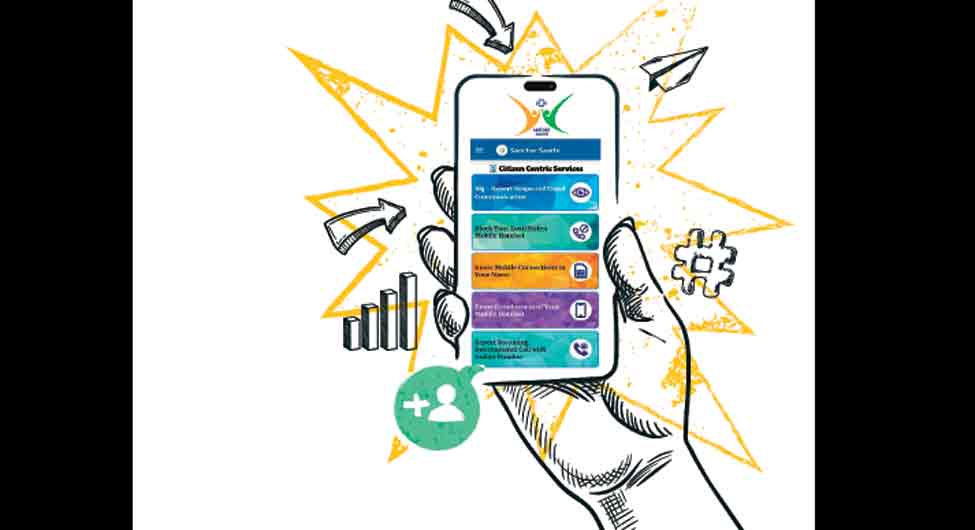
Sanchar Saathi facilitates dealing with phone fraud. It launched to the public as a portal in 2023. It was launched as a mobile app in January 2025. Sanchar Sathi is the name of a citizen-centric service initiative developed by the Department of Telecommunications of India.
Through the Sanchar app and its web portal, buyers can check the EMEI of the handset before purchasing the phone. It also has the facility to block or locate lost or stolen phones through the CEIR system. They can also be identified and the registered mobile connections can also be reviewed. This makes it possible to report suspicious, fraudulent or spam phone calls or easily identify international scam calls. Phone banking can be done securely through this app and if anyone wants to give information about their phone banking to someone, then that can also be done securely through it.
mandate
The DoT instructions require manufacturers and importers to ensure that all mobile handsets manufactured or imported for use in India have the Sanchar Sathi mobile application pre-installed. They also had to make sure that the pre-installed Sanchar Saathi application was visible to anyone buying a used phone. They also want the app to be clearly visible and easily accessible before using the phone for the first time or at the time of device setup. Also, it should work well and cannot be disabled. It also said that, even for phones already made in India and present in existing sales channels, manufacturers and importers will have to make appropriate efforts to promote the application through software updates. As per these instructions, complete implementation is required within 90 days and submission of compliance report within 120 days.
protest against order
The first and most important company to refuse to comply with this order of the Department of Telecommunications was Apple, which is a smartphone manufacturing giant. According to a Reuters report, Apple is going to inform the government that its company does not follow such orders anywhere in the world, as it poses security risks to the privacy of the iOS (iPhone operating system) ecosystem.
“It’s a double-edged sword,” an Apple source told the agency. Apple tightly controls its App Store and iOS software, which are the backbone of its $100 billion-a-year services business, while Android’s open-source structure gives manufacturers like Samsung and Xiaomi more flexibility.
Internet Freedom Foundation (IFF), India’s leading digital rights NGO, has also issued a formal statement on this. In its statement, it described the DoT directive as “unbalanced, legally weak and structurally hostile to user privacy and autonomy”. It said that the company will try to get it taken back.
Meghna Bal, director of the Esya Centre, which works as a think tank for technology policy, says the order raises fundamental questions related to transparency, security and due process. “The main concern is that the app has been mandated without transparency, testing or clarity about the security of user data,” says Bal. “We don’t know who created it, how it works, or why it requires so many permissions in its settings.”
Child argues that its disadvantages outweigh the stated advantages. She says, “There is no evidence of a pilot project, no clarity about data flows and it is not clear how fraud-related information will be collected or verified. The app mimics features already offered by telecom providers and private apps. What’s worse, making it mandatory creates the risk of a single attack, leaving millions of users vulnerable to potential security breaches.”
“When a government-backed app is deployed to phones at scale, it’s natural to have concerns about data access,” says Amit Relan, CEO and co-founder of mFilterRight, a company that detects and prevents ad fraud. “It’s important to pre-empt these concerns through transparency, clearly defined data limits, and strong security standards,” says Relan. “Trust in public digital infrastructure can only be built when privacy safeguards are clear and verifiable.”
Government response
Scindia once again reiterated that use of the app is completely voluntary. “It is a voluntary and democratic system,” he said. If users want, they can take advantage of it by activating the app. If they don’t want it, they can easily remove it from their phone at any time.
The attitude of the government is not adamant and it will amend the instructions if necessary. The purpose of the app is only to protect people from fraud on phones. anyone can delete it anytime
Jyotiraditya Scindia, Minister of Communications, Government of India