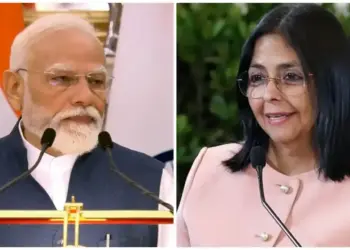
On the economic development front, India has been progressing rapidly and has now secured a strong place among the top economies of the world. After reaching the fourth position in the global economy, India aims to become a developed country by 2047. Meanwhile, international institutions are also openly recognizing India’s economic strength. The International Monetary Fund (IMF) has described India as a main pillar of global growth. Before the release of the World Economic Outlook (WEO) in January, IMF spokesperson Julie Kozak had made this important statement about the Indian economy.
IMF impressed by India’s growth
The IMF had estimated India’s economic growth rate at 6.6 percent for the financial year 2025-26 on the basis of strong domestic consumption. During a press conference, Julie Kozak said that India’s third quarter results were better than expected. Therefore, the growth projection for India may be revised down in the WEO update in January. This clearly shows that IMF’s confidence in India’s growth rate has strengthened further.
The United Nations (UN) has also made significant changes in its estimates for India’s economic growth. It has raised the growth forecast for FY2026 to 6.6% from 4.4% and projected a growth rate of 6.7% for 2027. According to the UN, this change has been driven by increased private consumption and a significant increase in public investment. It also assessed that the impact of higher US tariffs on Indian exports would be limited.
World Bank also increased GDP growth estimate
The World Bank has also raised its GDP growth forecast for India for the current financial year to 7.2 percent, 0.9 percent higher than its June estimate, on the basis of strong domestic demand and tax reforms. The World Bank’s ‘Global Economic Prospects’ report says that growth may slow down to 6.5% in 2026-27. This estimate is based on the assumption that 50% US import tariffs will remain in place. Despite this, the report said India will maintain the fastest growth rate among the world’s largest economies. Domestic demand remains the biggest strength
According to the World Bank, despite higher tariffs on some exports to the US, India’s growth rate has not been affected much. This has happened due to strong domestic demand, diversified exports and better private consumption. America’s share in India’s total merchandise exports is about 12 percent.
The report further states that growth may reach 6.6% in the financial year 2027-28. This will be due to strong service sector, better exports and increased investment. The World Bank had estimated India’s growth rate to be 6.3 percent in June, which has now been increased.
The increased projections from all three global institutions – IMF, United Nations and World Bank – show that the Indian economy is growing strongly despite global uncertainties. Driven by strong domestic demand, tax reforms and investment, India will remain one of the world’s fastest growing economies in the coming years.