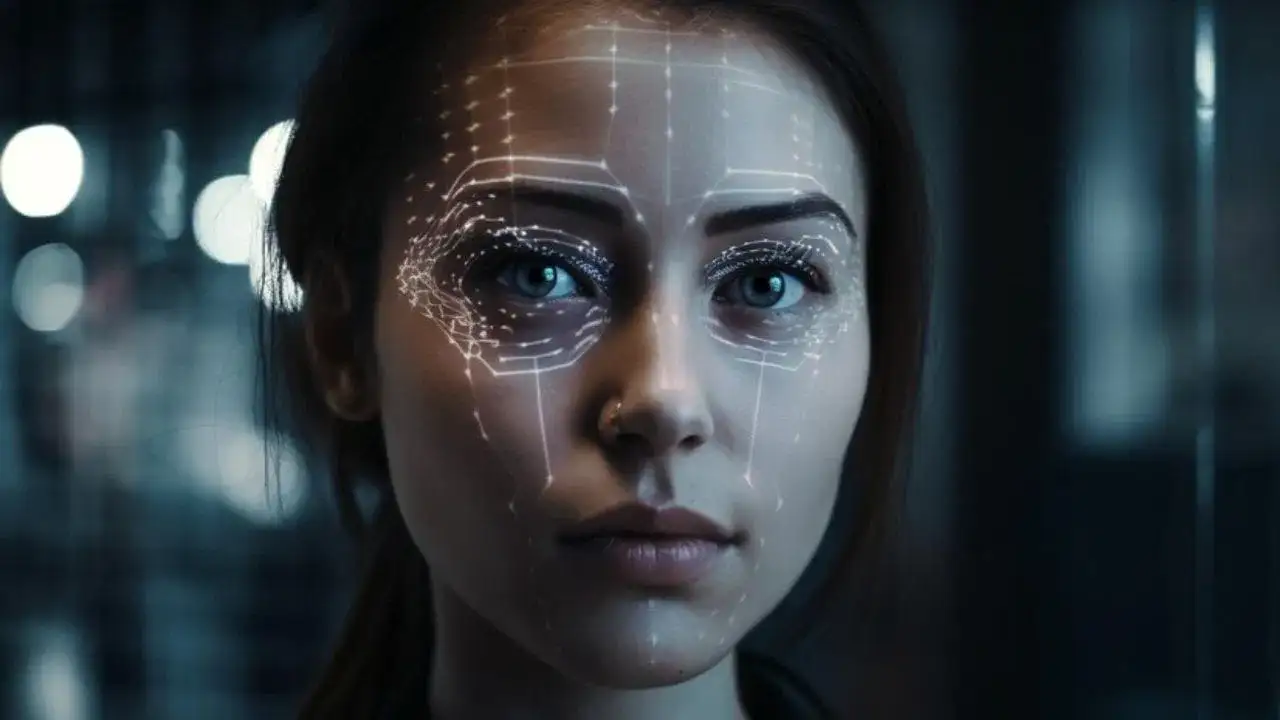
In today’s digital age, social media has become an essential part of our everyday lives. Thousands of videos and photos go viral every day on platforms like Facebook, Instagram, X (formerly Twitter), and YouTube. Sometimes these include shocking statements of leaders or videos of celebrities which are difficult to believe. The real problem comes when many of these videos seem so real that people believe them to be true without thinking.
Actually, in the changing world of AI, creating videos has become very easy. Now, fake videos can be created in just a few seconds by copying someone’s face, voice and expressions. This is the reason why it has become difficult for common people to differentiate between real and fake videos. However, if you pay a little attention, you can easily identify whether a video is made by AI or is real by some signs. So, let us tell you how you can identify which videos are made with AI and which are not.
monitor facial expressions
No matter how advanced AI becomes, it often makes mistakes in facial expressions. In deepfake videos, smiles often do not look natural, lip movements do not match, and eyebrows and cheeks move strangely. Additionally, the real person’s facial movements are natural, whereas the fake video has some distortion.
check light and shadow
In the original video, the light falls naturally on the face, clothes, and background. However, in AI videos, the lighting on faces often does not match the rest of the frame. Sometimes the shadow appears to come from one direction, while the light appears to come from the other direction. Sudden changes in facial brightness in different shots could also be a sign of AI-generated videos.
Pause the video and check frame-by-frame
If you suspect a video is fake, pause it and watch it carefully. In videos made with AI, the edges of faces often appear blurred. Hair may blend strangely into the background, or appear jumbled up. Sometimes, changes in the shape of the eyes or teeth may also be seen. If things in the frame don’t look the same, the video may be fake.
Notice the difference in sound and tone
In deepfake videos, voices often sound strangely clear or robotic. Sometimes, the voice lacks emotion, and the tone remains the same throughout the video. A real human voice has inflection and emotion, which is clearly lacking in AI-generated audio.
Use reverse search and fact-checking tools
If a video is going viral, you can use Google Lens or Google Reverse Image Search to know its authenticity. You can also find the source of the video by uploading screenshots of it. Tools like InVID can also help in knowing the truth of viral videos.
You can also use AI detection tools
Nowadays, many websites and tools can scan photos, videos, audios and text to find out whether they were created by AI or not. Tools like AI or Not, GPT Zero, Zero GPT, QuillBot Detector and TheHive AI Detector are considered very useful for this work.